
India rebukes Jayapal as election officials report 7.2 crore draft-roll deletions
India’s Ministry of External Affairs rejected U.S. Representative Pramila Jayapal’s criticism of the electoral-roll revision, calling her remarks “unwarranted and uninformed.” Jayapal had raised concern about reports of 13 crore deletions, while the Election Commission of India reported 7.2 crore removals in the first two phases.
AI-assisted synthesis · Based on 5 outlets' reporting · Article text read from 3 of 5 outletsHow it's made
View timeline · 10 entries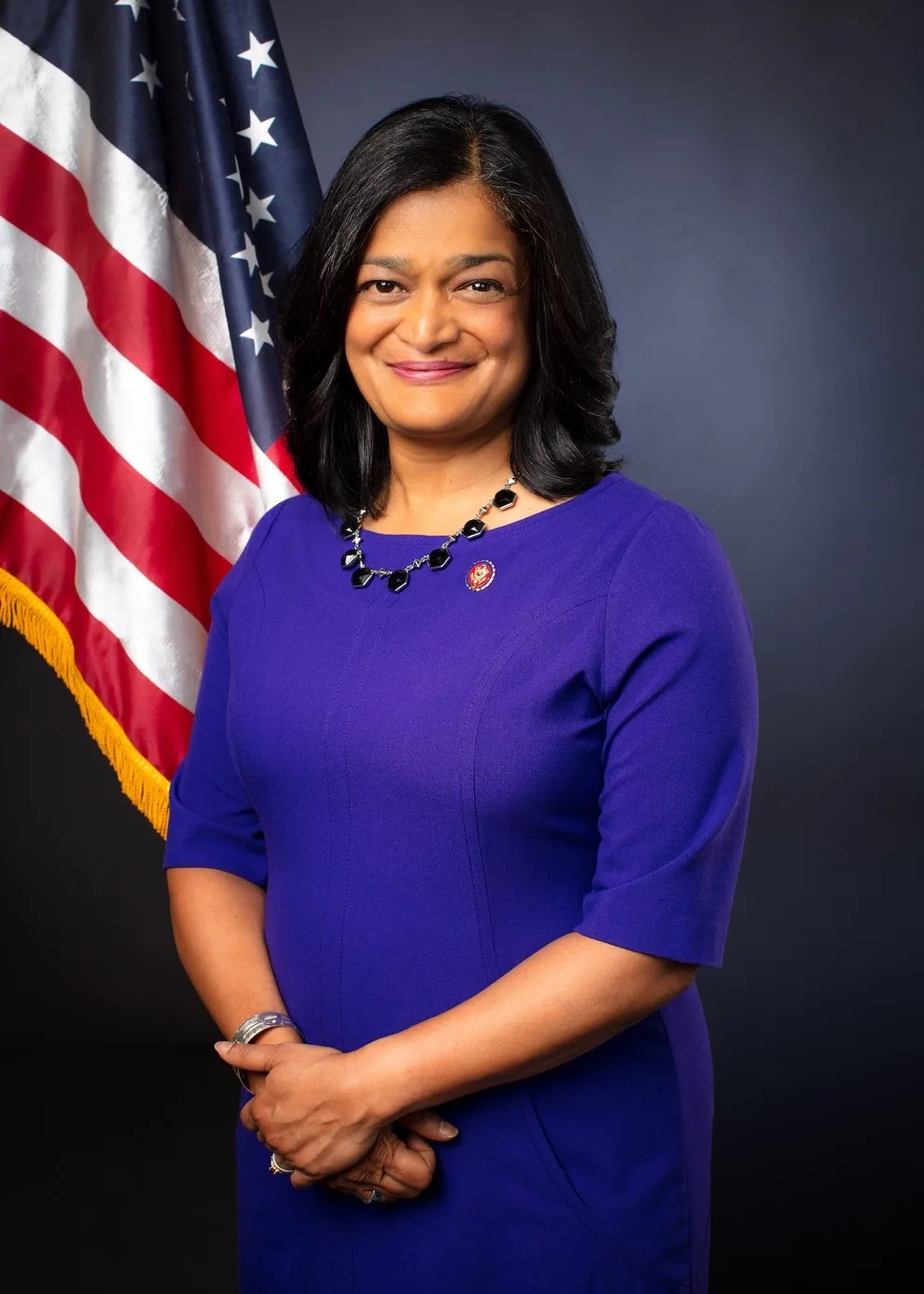 File photo
What happened
Key facts
- India rejected U.S. Representative Pramila Jayapal’s criticism of the electoral-roll revision and described her remarks as “unwarranted and uninformed.” (per boldnewsonline.com, indianewengland.com, The New Indian Express).
- Ministry of External Affairs spokesperson Randhir Jaiswal said Jayapal’s remarks interfered in India’s electoral process and undermined democracy (per boldnewsonline.com, indianewengland.com).
- Jayapal expressed concern about reports that 13 crore names had been removed from India’s draft electoral rolls (per boldnewsonline.com, indianewengland.com, The New Indian Express).
- Jayapal wrote on X that she was deeply concerned about the Indian government’s actions to purge 130 million people from voting rolls (per indianewengland.com, The New Indian Express).
- The Election Commission of India reported that about 7.2 crore names were removed from draft electoral rolls during the first two phases of the revision across 13 states and Union Territories (per boldnewsonline.com, The New Indian Express).
- The Election Commission of India said excluded voters can seek inclusion through the prescribed procedure (per boldnewsonline.com, The New Indian Express).
The brief
India’s Ministry of External Affairs rejected U.S. Representative Pramila Jayapal’s criticism of the country’s electoral-roll revision, calling her comments “unwarranted and uninformed” and saying they interfered in India’s electoral process. Jayapal had questioned reports of large-scale deletions from draft voter rolls.
The dispute centers on the difference between her concern about reported removals and the Election Commission of India’s figures for the stages it has reported. Jayapal expressed concern about reports that 13 crore names had been removed from draft rolls.
In a post on X, she described the issue as an effort by the Indian government to remove 130 million people from voting rolls. The New Indian Express and Bold News Online also report that she compared the issue with actions by the Trump administration.
Her public concern is a claim about the scale and character of the deletions; the sources do not provide evidence establishing that every person removed from a draft roll has lost voting eligibility permanently.
Ministry of External Affairs spokesperson Randhir Jaiswal said Jayapal’s remarks undermined democracy and characterized them as interference in the electoral practices of a fellow democracy. The Indian government’s response focused on her public criticism of the revision and its view that an American lawmaker should not intervene in India’s electoral processes.
Jaiswal also said India was open to constructive conversation with Jayapal to address what he called her misconceptions. The Election Commission’s figures provide a separate account of the deletions. It reported that about 7.2 crore names were removed from draft electoral rolls in the first two phases, which covered 13 states and Union Territories.
Those figures are attributed to the commission; the reporting does not independently verify them or explain how many removals may later be reversed or lead to successful inclusion applications. The ongoing third phase has produced draft rolls in 18 states and Union Territories, with 6.16 crore further deletions reported in the source coverage.
Bold News Online gives a combined reported figure of about 13.36 crore across the three phases. That total is close to Jayapal’s reference to 13 crore, but the figures describe different reporting: her concern was about reports of removals, while the commission figures are presented by phase. The sources do not establish that the two accounts use identical counting or timing.
The Election Commission said people excluded from the draft rolls can apply for inclusion through the prescribed procedure. That avenue is important because the figures concern draft electoral rolls, while the reporting does not say how many affected individuals have sought review, how many applications have been accepted, or what the final rolls will show.
Those details bear directly on the practical effect of the revision for voters in the states and Union Territories covered. The immediate dispute is therefore both about the scale of the reported deletions and about who should scrutinize the process.
Jayapal raised concern over the reported total and drew a comparison with U.S. administration actions; India’s foreign ministry rejected her criticism as uninformed interference.
The next relevant information is the Election Commission’s treatment of inclusion applications and the final electoral-roll figures, which would clarify how draft deletions translate into the rolls used for voting.
Why it matters
- People listed on draft rolls in the 13 states and Union Territories covered in the first two phases face a specific mechanism for challenging exclusion: the Election Commission says they can seek inclusion through its prescribed procedure.
- The Election Commission reported 7.2 crore deletions in the first two phases and a further 6.16 crore in the third; the reported counts make the number of affected draft-roll entries a central stake in the dispute.
- Jayapal’s concern about 13 crore reported removals and India’s objection to her criticism place scrutiny of the revision alongside the question of electoral-process oversight.
What to watch next
- Whether the Election Commission reports how many people excluded from draft rolls seek inclusion through the prescribed procedure.
- Whether the Election Commission reports how many inclusion applications are accepted and how the final rolls compare with the draft figures.
- Whether Jayapal responds to the Ministry of External Affairs’ offer of constructive conversation.
How it's being covered
Coverage analysisShow details5 source articles · 5 unique outletsOutlet political mix: Center Only· 4 Center · 1 unratedWhere the outlets are based: Asia 60% · Unknown 40%
- Coverage is currently concentrated among Center-rated outlets (4 of 4 rated sources); comparatively few Left or Right-rated outlets have published on the event.
How outlets' accounts compare
1 framing difference · 3 uncorroborated claims · 3 information gaps- The Ministry of External Affairs frames Jayapal’s criticism as interference in India’s electoral process; Jayapal frames the reported deletions as a concern about removing 130 million people from voting rolls.
- Jayapal characterizes the reported deletions as an effort by the Indian government to remove voters; the Election Commission’s figures describe removals from draft rolls by phase, and the sources do not independently establish Jayapal’s characterization.
- Randhir Jaiswal called Jayapal’s remarks “unwarranted and uninformed.”
- Jayapal wrote that she was “deeply concerned” about the Indian government’s actions to purge 130 million people from voting rolls.
- The sources do not provide the number of people who applied for inclusion or the outcomes of those applications.
- The sources do not explain the criteria or administrative process used to remove names from draft rolls.
- The sources do not establish whether the reported deletions represent people permanently losing voting eligibility or how many may be restored to the rolls.
Timeline
Developments from this story's sources, dated background we compiled and fact-checked, and our earlier coverage. Each row says which.- India established the Election Commission of India as a constitutional body.Background · compiled and fact-checked by Updat3
- India’s Constitution, which came into force on January 26, 1950, sets out the framework for elections and electoral rolls.Background · from our historical context
- India enacted the Representation of the People Act, 1950, which provides for electoral rolls.Background · compiled and fact-checked by Updat3
- The Representation of the People Act, 1950, enacted on September 12, 1950, governs the preparation and revision of electoral rolls, including the registration of voters and the correction of entries.Background · from our historical context
- India adopted the Registration of Electors Rules, 1960, setting rules for preparing and revising electoral rolls.Background · compiled and fact-checked by Updat3
- Pramila Jayapal was elected to the U.S. House of Representatives.Background · compiled and fact-checked by Updat3
- Pramila Jayapal and other members of Congress urged President Joe Biden to raise human-rights concerns with Narendra Modi.Background · compiled and fact-checked by Updat3
- The revision became the subject of petitions before the Supreme Court of India, which heard challenges to the process during 2025.Background · from our historical context
- India’s Election Commission began a Special Intensive Revision of electoral rolls in Bihar.Background · compiled and fact-checked by Updat3
- The exercise required voters to submit enumeration forms and supporting documents; the Commission published a draft roll on August 1, 2025.Background · from our historical context
How we got here
The immediate precedent was the Election Commission of India’s 2025 Special Intensive Revision (SIR) in Bihar, announced on June 24 ahead of the state’s assembly election. The exercise required voters to submit enumeration forms and supporting documents; the Commission published a draft roll on August 1, 2025.
The revision became the subject of petitions before the Supreme Court of India, which heard challenges to the process during 2025. That dispute placed voter verification, the Commission’s authority and the routes available to people omitted from a draft list at the centre of public debate before the later nationwide phases.
Original sources
5 articles from 5 outletsEvery story links to the reporting it was built from. How we choose sources
Spotted a factual error, a broken link or a misleading summary? Tell us.