
Rajbhar says poll dates will follow Uttar Pradesh OBC report
Uttar Pradesh Panchayati Raj Minister Om Prakash Rajbhar said the government is ready to hold panchayat elections and will set dates after receiving the OBC Commission’s report. Rajbhar said the commission expects to submit its report within a month and that ballot papers have reached district offices.
AI-assisted synthesis · Based on 4 outlets' reporting · Full text read from 2 of 4 outletsHow it's made
View timeline · 1 entry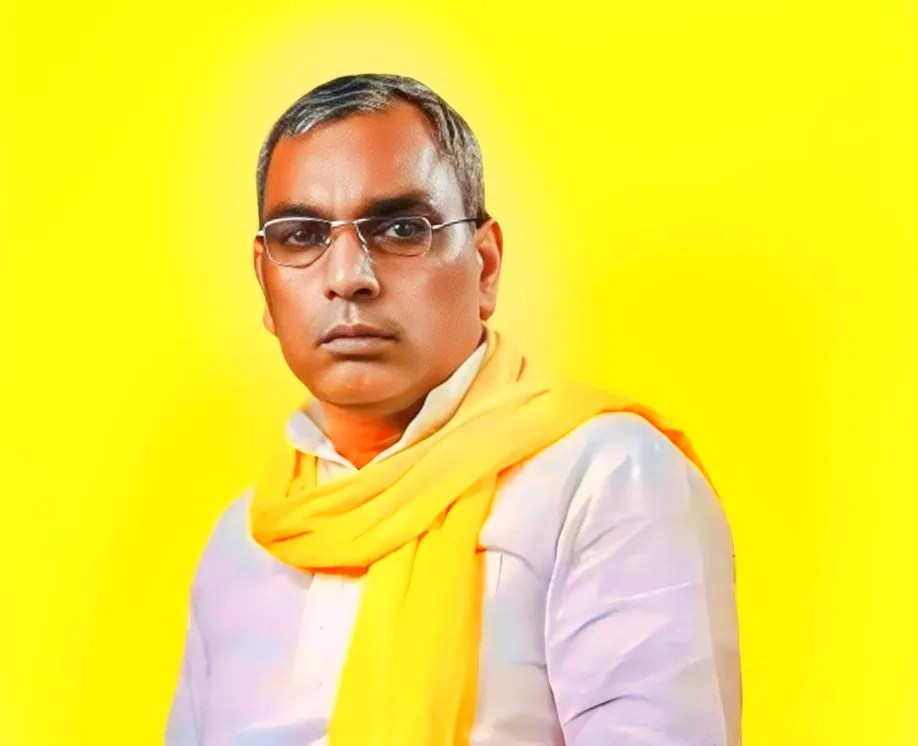 File photo
What happened
Key facts
- Uttar Pradesh Panchayati Raj Minister Om Prakash Rajbhar said the government was ready to hold panchayat elections (per bhaskarenglish.in, Hindustan Times).
- Rajbhar said the government would announce election dates after receiving the OBC Commission’s report (per bhaskarenglish.in, Hindustan Times).
- Rajbhar said the commission was determining OBC reservation for the panchayat elections and expected to submit its report within a month (per bhaskarenglish.in, Hindustan Times).
- Rajbhar said ballot papers had reached the districts (per bhaskarenglish.in, Hindustan Times).
- Rajbhar said the Allahabad High Court had ordered panchayat elections in Uttar Pradesh within three months (per bhaskarenglish.in, nationalheraldindia.com, Hindustan Times).
- Rajbhar said the Uttar Pradesh government established the OBC Commission on the Supreme Court’s orders (per bhaskarenglish.in, Hindustan Times).
- The Uttar Pradesh State Rural Local Bodies Dedicated Backward Classes Commission was formed to determine OBC reservations in three-tier panchayat institutions (per Hindustan Times, bhaskarenglish.in).
- Rajbhar said there would be no need to approach the Supreme Court once the commission report arrived (per Hindustan Times, bhaskarenglish.in).
The brief
Uttar Pradesh Panchayati Raj Minister Om Prakash Rajbhar said the state government is prepared to hold panchayat elections and will announce dates after it receives a report on reservations for Other Backward Classes (OBCs). The schedule is therefore linked, in Rajbhar’s account, to the commission’s report; he said the commission expects to submit it within a month.
Rajbhar said ballot papers had already reached the districts. He also said the government was ready to proceed with the elections, while describing the report as the outstanding step before it sets dates. The two reports agree on that sequence: commission report first, announcement of dates afterward.
The commission’s remit is to determine OBC reservations in the panchayat polls. Hindustan Times identifies it as the Uttar Pradesh State Rural Local Bodies Dedicated Backward Classes Commission and says it was formed to assess reservations in three-tier panchayat institutions.
Bhaskar English reports Rajbhar’s account that the state government established the commission on the Supreme Court’s orders. Hindustan Times adds that retired Allahabad high court Justice Ram Avtar Singh chairs it. Rajbhar also said the Allahabad High Court had ordered the elections to be held within three months.
National Herald’s headline likewise reports that the court ordered Uttar Pradesh panchayat polls within that period. Hindustan Times describes the court as directing the State Election Commission to hold the elections, while Bhaskar English presents Rajbhar’s account as an order to the government.
Those descriptions identify different recipients of the direction; the reports do not resolve that distinction. The three-month period is presented as Rajbhar’s account in Bhaskar English, while National Herald’s headline independently reports the court order and timeframe.
In remarks reported by Hindustan Times, Rajbhar said that once the report arrives, the government would announce the dates and the election process would proceed. He also said there would be no need to approach the Supreme Court and that the government was not backing away from the elections.
Bhaskar English independently reports his statements that the government was ready to comply with the High Court’s order and would not withdraw from the polls. These are Rajbhar’s statements about the government’s position and intended course; the reports do not establish that election dates have been announced.
The immediate procedural steps now described are the commission’s submission of its report and the government’s subsequent announcement of dates. Rajbhar’s account puts the report’s expected delivery within a month, and the court timetable he cited sets a separate three-month period for holding the polls.
Ballot papers reaching districts indicate preparation, but the reports do not say that voting has begun or provide a polling date. Hindustan Times also reports that 76 leaders and workers from other parties joined Rajbhar’s Suheldev Bharatiya Samaj Party at a membership event in Lucknow. That party activity was separate from the election timetable.
The central account remains Rajbhar’s assurance that the government is prepared to hold the polls, with the OBC reservation report preceding the announcement of dates.
Why it matters
- OBC reservation decisions for voters and candidates in Uttar Pradesh’s three-tier panchayat institutions depend on the commission’s report; Rajbhar said it was expected within a month.
- The Uttar Pradesh government’s stated election schedule depends on receiving the report before announcing dates, even though Rajbhar said ballot papers had reached the districts.
- The court timetable carries a specific stake: Rajbhar said the Allahabad High Court ordered polls within three months, while National Herald’s headline also reports that timeframe.
What to watch next
- Whether the Uttar Pradesh State Rural Local Bodies Dedicated Backward Classes Commission submits its OBC reservation report within the month Rajbhar said it expected.
- Whether the Uttar Pradesh government announces panchayat election dates after receiving the report.
- Whether the State Election Commission holds the polls within the three-month period reported for the Allahabad High Court order.
How it's being covered
Coverage analysisShow details5 source articles · 4 unique outletsCoverage mix: Center Only· 3 CenterWhere the outlets are based: Asia 100%
- Coverage is currently concentrated among Center-rated outlets (3 of 3 rated sources); comparatively few Left or Right-rated outlets have published on the event.
- Coverage is currently concentrated among outlets based in Asia (4 of 4 geographically-identified sources).
How outlets' accounts compare
2 framing differences · 3 uncorroborated claims · 1 information gap- Hindustan Times says the Allahabad High Court directed the State Election Commission to hold the polls; Bhaskar English reports Rajbhar’s account that the court ordered the government to hold them.
- Bhaskar English attributes the claim that the government established the OBC Commission on Supreme Court orders to Rajbhar; Hindustan Times describes the commission’s purpose and chair but does not state that basis for its formation.
- The reports describe different recipients of the High Court direction—the State Election Commission in Hindustan Times and the government in Rajbhar’s account reported by Bhaskar English.
- Rajbhar said the government was prepared for the elections and would announce dates after the OBC Commission report arrived.
- Rajbhar said there would be no need to approach the Supreme Court once the report was received.
- The sources do not state the exact date of the High Court order or give a scheduled polling date.
Timeline
Developments from this story's sources, dated background we compiled and fact-checked, and our earlier coverage. Each row says which.- The constitutional framework dates to the 73rd Amendment, which came into force on April 24, 1993.Background · from our historical context
How we got here
The immediate legal backdrop was an Allahabad High Court order directing Uttar Pradesh to hold panchayat elections within three months. Before that order, the state had set up the Uttar Pradesh State Rural Local Bodies Dedicated Backward Classes Commission to determine OBC reservation in its three-tier panchayat institutions.
The commission’s role reflects Supreme Court rules requiring state governments to establish a sound basis for reserving seats for backward classes in local bodies. The constitutional framework dates to the 73rd Amendment, which came into force on April 24, 1993.
Original sources
5 articles from 4 outletsEvery story links to the reporting it was built from. How we choose sources
Spotted a factual error, a broken link or a misleading summary? Tell us.