
Tom Barrack says US could strike Iran this weekend, rejects regime change goal
Tom Barrack said the United States could strike Iran as soon as the weekend. He said President Donald Trump remained open to a deal and that the United States was not seeking to topple Iran’s government.
AI-assisted synthesis · Based on 5 independent reports from 9 outlets · Article text read from 1 of 5 reportsHow it's made
View timeline · 8 entries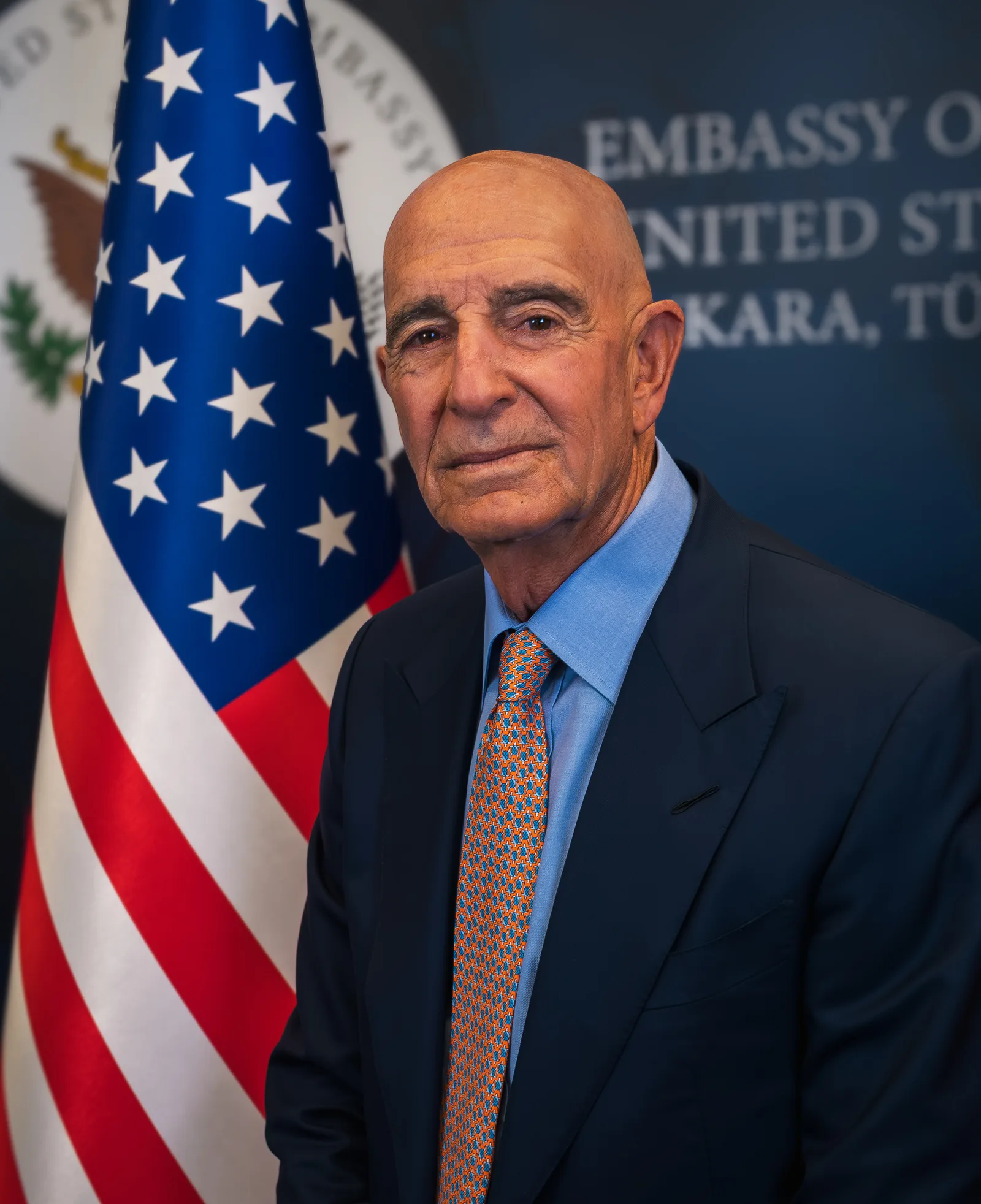 File photo
What happened
Key facts
- Tom Barrack said the United States could strike Iran as soon as the weekend (per CNA, The Straits Times, The Hindu).
- Barrack identified himself in the interview as the US ambassador to Turkey and point man on Syria, and said he did not have a direct role on Iran (per CNA).
- Barrack said President Donald Trump was open to a deal and that the two sides had been at the table for months (per CNA).
- Barrack said the United States was not seeking to topple Iran’s government and quoted Trump as saying he was not interested in regime change (per CNA).
- Barrack said threats against the United States, its allies and the Gulf would bring consequences (per CNA).
- The article said Trump had signalled openness to resuming strikes after a long diplomatic deadlock, but had earlier said strikes would not happen before the November 3 US congressional elections (per CNA).
- The article said Benjamin Netanyahu had repeatedly vowed in recent days to topple Iran’s government (per CNA).
The brief
Tom Barrack said the United States could strike Iran as soon as the weekend, while also saying President Donald Trump remained open to a deal. CNA reported that Barrack made the comments in an interview while visiting the Gulf on Friday, October 23. The article identified him as the US ambassador to Turkey and point man on Syria, and said he did not have a direct role on Iran.
Barrack described Trump as “open and available and accessible to a deal” and said the sides had been at the table for months. His remarks presented diplomacy and the possibility of a US strike as concurrent possibilities: he spoke of a potential attack while portraying Trump as willing to reach an agreement.
On the US goal, Barrack said Washington was not seeking to topple Iran’s government. He quoted Trump as saying he was “not interested in regime change,” and said any consequence would not be aimed at changing the government.
CNA said this position contrasted with Benjamin Netanyahu’s stated aim; it reported that Netanyahu had repeatedly vowed in recent days to topple Iran’s government. Barrack also warned that threats against the United States, its allies and the Gulf would bring consequences. He did not identify a specific threatened action in the quoted remarks.
His statement that the United States could strike Iran described a possibility, not an announced decision to launch an attack. CNA said Trump had signalled openness to resuming strikes after what it described as a long diplomatic deadlock. The article also reported that Trump had earlier said strikes would not happen before the US congressional elections on November 3.
It did not explain how that earlier timing related to Barrack’s later warning that a strike could come as soon as the weekend. The immediate points to watch are whether the United States launches a strike during the period Barrack identified, whether negotiations produce a deal, and how the stated US position on regime change relates to Netanyahu’s publicly stated goal.
Why it matters
- Iran is the country Barrack said the United States could strike; a US military attack is the concrete risk raised in his remarks.
- The United States, its allies and the Gulf are the parties and region Barrack named in warning that threats would bring consequences.
- The US position Barrack described—no aim to topple Iran’s government—differs from the goal CNA attributed to Benjamin Netanyahu.
What to watch next
- Whether the United States launches a strike during the weekend period Barrack identified.
- Whether Trump and Iran reach a deal after Barrack said the sides had been negotiating for months.
- Whether the stated US position against regime change remains distinct from Benjamin Netanyahu’s stated goal of toppling Iran’s government.
- How the November 3 US congressional election timing relates to Trump’s earlier statement that strikes would not happen before the election.
How it's being covered
Coverage analysisShow details9 source articles · 9 unique outlets · 4 distinct reportsOutlet political mix: Center Only· 1 Left · 6 Center · 2 unratedWhere the outlets are based: Asia 44% · Middle East 33% · Other 23%
- Coverage is currently concentrated among Center-rated outlets (6 of 7 rated sources); comparatively few Right-rated outlets have published on the event.
How outlets' accounts compare
Timeline
Developments from this story's sources, dated background we compiled and fact-checked, and our earlier coverage. Each row says which.- Iran’s revolution ended the monarchy and established the Islamic Republic.Background · compiled and fact-checked by Updat3
- Iran’s previously undisclosed nuclear activities became public.Background · compiled and fact-checked by Updat3
- The Joint Comprehensive Plan of Action (JCPOA), signed on July 14, 2015, limited Iran’s nuclear activities in exchange for sanctions relief.Background · from our historical context
- President Donald Trump announced that the United States would withdraw from the nuclear agreement with Iran and reimpose sanctions.Background · compiled and fact-checked by Updat3
- Iran launched drones and missiles at Israel, saying it was responding to an April 1 strike on an Iranian diplomatic compound in Damascus.Background · compiled and fact-checked by Updat3
- On October 1, 2024, Iran launched another missile attack on Israel, saying it was retaliation for Israeli actions against Iranian allies and the killing of senior figures.Background · from our historical context
- The United States struck Iranian nuclear facilities at Fordow, Natanz and Isfahan.Background · compiled and fact-checked by Updat3
- A further escalation began on February 28, 2026, when the United States and Israel launched coordinated strikes on Iranian power plants, air defenses and military infrastructure.Background · from our historical context
How we got here
The immediate backdrop to the current US-Iran confrontation was the collapse of the 2015 nuclear agreement and the subsequent failure to restore it. The Joint Comprehensive Plan of Action (JCPOA), signed on July 14, 2015, limited Iran’s nuclear activities in exchange for sanctions relief.
On May 8, 2018, President Donald Trump announced the United States’ withdrawal; from 2019, Iran exceeded several JCPOA limits, saying its steps answered the US withdrawal.
Original sources
4 of 9 articles · Asia · Show allEvery story links to the reporting it was built from. How we choose sources
Spotted a factual error, a broken link or a misleading summary? Tell us.