
US Justice Department charges James Comey over alleged information leak
The Justice Department charged James Comey in a two-count filing alleging that he transmitted national defense information and conspired to disclose it. Prosecutors say Comey directed an unnamed person, through alleged co-conspirators, to share the information with a reporter; Comey says he is innocent and calls the case an abuse of the Justice Department.
AI-assisted synthesis · Based on 5 outlets' reporting · Article text read from 4 of 5 outletsHow it's made
View timeline · 11 entries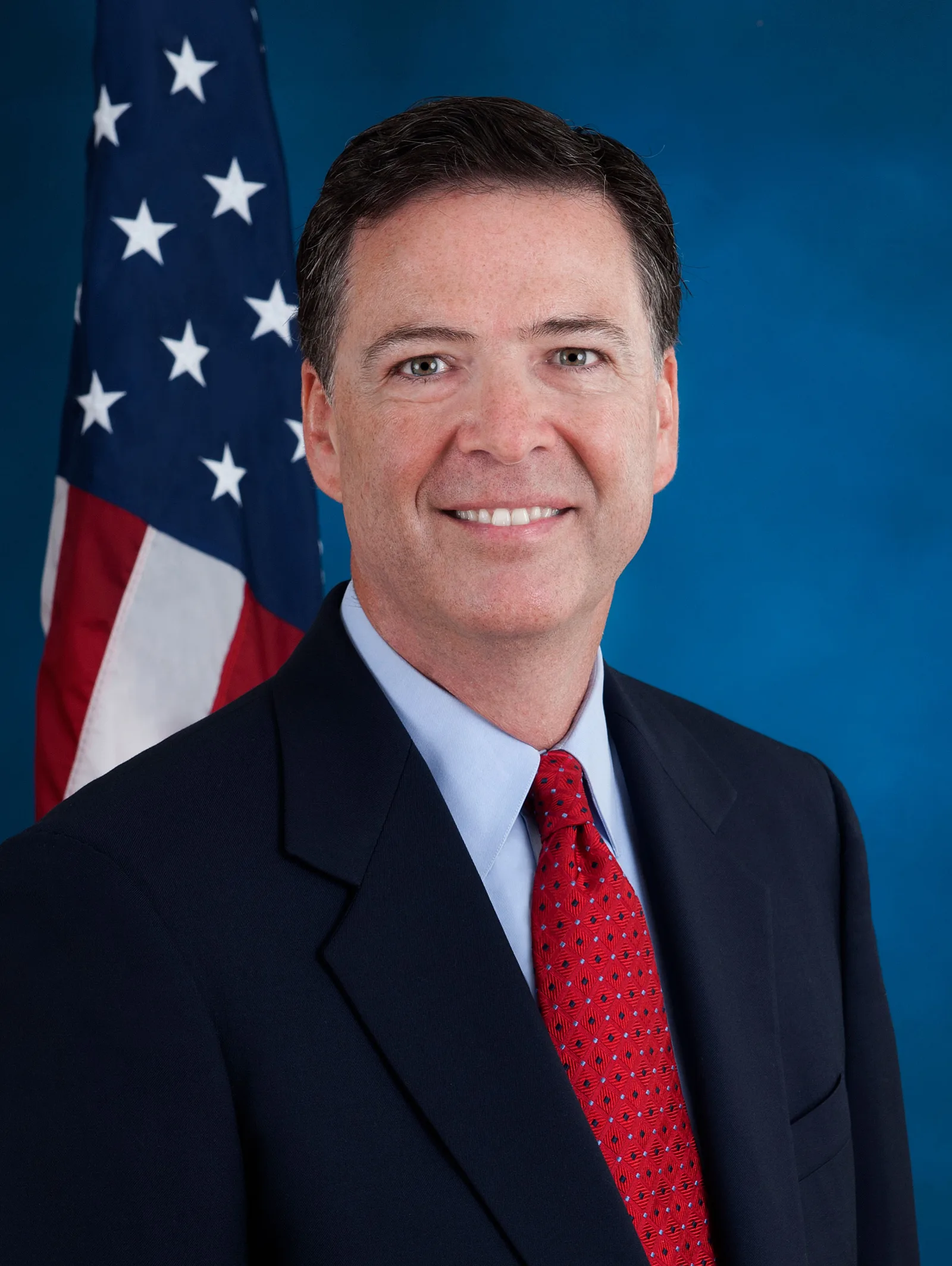 File photo
What happened
Key facts
- The charge marks the third time Comey has been indicted in the past 13 months.
- Court documents say the charges were filed exactly 10 years after the alleged leak, matching the statute of limitations for unauthorised disclosure offences.
- A separate case accused Comey of making false statements to a 2020 Senate hearing and obstructing a congressional investigation; a judge dismissed it after finding the prosecutor was illegally appointed.
- Comey said he was still innocent and described the case as an abuse of the Department of Justice.
- Prosecutors allege Comey directed an unnamed person, through one or more alleged co-conspirators, to disclose national defense information to a reporter for a national news publication.
- The filing does not identify the information, reporter, publication or alleged co-conspirators.
- The article describes this as the third time the Department of Justice has pursued Comey since the start of President Trump’s second term.
- The indictment was filed in the District of Columbia.
The brief
The Justice Department charged former FBI Director James Comey in a two-count filing alleging that he transmitted national defense information and conspired to disclose it. Prosecutors say the alleged conduct occurred in 2016, when Comey led the FBI, and involved directing another person to share information with a reporter for a national news publication.
The filing was made in the District of Columbia. The Washington Examiner reports that prosecutors allege Comey acted through one or more alleged co-conspirators. The charge concerns information that prosecutors characterize as national defense information, but the filing details in the coverage do not identify the information, reporter, publication or alleged co-conspirators.
Comey rejected the allegations. He said he remained innocent and would contest the case in court. The Sydney Morning Herald and New York Post report that he also called the prosecution an abuse of the Department of Justice.
The New York Post says Comey made his comments in a video posted on Substack; the Washington Examiner reports his pledge to stand up in court and fight the charges. A Justice Department spokesperson told the Daily Mail and the New York Post that prosecutors filed a “waiverless criminal information” to toll the statute of limitations concerning the allegations.
The outlets’ accounts do not describe that filing in identical legal terms: the Washington Examiner calls the charging document an indictment, while the Daily Mail and the New York Post describe a criminal information. The Sydney Morning Herald refers to charges unsealed on Monday (US time).
The coverage places the alleged disclosure in 2016 and describes the charges as a third federal indictment or Justice Department case against Comey.
The Sydney Morning Herald and Washington Examiner also recount separate prior cases, but their descriptions differ: one says a judge dismissed a case involving alleged false statements to a Senate hearing and obstruction after finding the prosecutor was illegally appointed; the other describes a dismissed case concerning an Instagram photograph interpreted by prosecutors as a threat against President Donald Trump.
Those accounts concern distinct proceedings and do not establish the outcome of the current charges. Comey’s immediate stated course is to fight the allegations in court. The charge remains an accusation, not a finding of guilt.
The filing’s characterization of the alleged conduct, Comey’s denial and the Justice Department spokesperson’s explanation of the limitations-related filing are the central competing positions in the case.
Why it matters
- Comey faces two federal counts tied to alleged disclosure of national defense information; the allegations could be tested in court, where he says he will fight them.
- The alleged disclosure involved information prosecutors classify as national defense information, but the coverage does not identify the material or the reporter who allegedly received it.
- The Justice Department spokesperson said the filing was intended to toll the limitations period, making the legal basis and effect of that filing a central issue in the prosecution.
- The case is described as the third federal indictment or Justice Department case against Comey, adding another proceeding to his existing legal disputes.
What to watch next
- Whether Comey contests the two counts in court, as he said he would.
- How prosecutors present the allegation that Comey directed another person to disclose national defense information.
- How the court addresses the filing’s limitations-related purpose described by the Justice Department spokesperson.
- Whether the charging process identifies the information, reporter, publication or alleged co-conspirators.
How it's being covered
Coverage analysisShow details5 source articles · 5 unique outletsOutlet political mix: Mixed· 1 Left · 1 Center · 3 RightWhere the outlets are based: US/Canada 80% · Asia 20%
- Coverage is currently concentrated among outlets based in US/Canada (4 of 5 geographically-identified sources).
How outlets' accounts compare
2 framing differences · 3 uncorroborated claims · 1 information gap- The Washington Examiner calls the charging document an indictment, while the Daily Mail and New York Post describe a waiverless criminal information; the Sydney Morning Herald calls the charges unsealed.
- The sources report prosecutors’ allegation and Comey’s denial, but they do not establish whether the alleged disclosure occurred or whether Comey is guilty.
- Prosecutors allege Comey directed an individual to disclose national defense information; Comey says he is innocent and characterizes the prosecution as an abuse of the Department of Justice.
- The Justice Department spokesperson said prosecutors filed a “waiverless criminal information” to toll the statute of limitations concerning the allegations.
- Comey said he remained innocent and would fight the case in court.
- The coverage does not identify the allegedly disclosed information, the reporter or publication, or the alleged co-conspirators.
Timeline
Developments from this story's sources, dated background we compiled and fact-checked, and our earlier coverage. Each row says which.- Congress enacted the Espionage Act, including provisions covering unauthorized conduct involving national-defense information.Background · compiled and fact-checked by Updat3
- Executive Order 13526, signed by President Barack Obama on December 29, 2009, established the federal system for classifying and safeguarding national-security information.Background · from our historical context
- Comey became FBI director on September 4, 2013.Background · from our historical context
- In 2016, the bureau investigated Hillary Clinton’s use of a private email server while she was secretary of state.Background · from our historical context
- On July 5, 2016, Comey announced that the FBI would not recommend criminal charges, while criticizing Clinton’s handling of classified information.Background · from our historical context
- President Donald Trump dismissed Comey as FBI director.Background · compiled and fact-checked by Updat3
- Comey’s June 8, 2017, Senate testimony described his interactions with Trump and the circumstances of his dismissal.Background · from our historical context
- On April 15, 2019, the Justice Department inspector general reported that Comey had retained memos documenting conversations with President Donald Trump and had arranged for a friend to provide one memo to a reporter.Background · from our historical context
- A judge dismissed the prosecution accusing Comey of false statements to a Senate hearing and obstructing a congressional investigation.Background · compiled and fact-checked by Updat3
- Donald Trump was inaugurated for a second, non-consecutive term as U.S. president.Background · compiled and fact-checked by Updat3
- In September 2026, Comey was also facing a separate prosecution over an Instagram photograph of seashells arranged to spell “86 47”; prosecutors alleged that the image threatened Trump.Background · from our historical context
How we got here
James Comey’s handling of records from his time as FBI director had already drawn scrutiny before 2026. On April 15, 2019, the Justice Department inspector general reported that Comey had retained memos documenting conversations with President Donald Trump and had arranged for a friend to provide one memo to a reporter.
The inspector general found that Comey had violated FBI policies by retaining the memos, though the department declined a criminal prosecution over that conduct. The Espionage Act of 1917, including 18 U.S.C. § 793, criminalizes specified unauthorized conduct involving information relating to the national defense.
Original sources
4 of 5 articles · US/Canada · Show allEvery story links to the reporting it was built from. How we choose sources
Spotted a factual error, a broken link or a misleading summary? Tell us.