
Vance says Trump will pursue U.S. goals without prolonging Iran conflict
JD Vance said Donald Trump would pursue U.S. objectives in the conflict with Iran without allowing it to become a prolonged war. Vance said opposition to lengthy wars does not mean rejecting military force and that Trump would turn to other administration priorities after achieving those objectives.
AI-assisted synthesis · Based on 5 outlets' reporting · Article text read from 1 of 5 outletsHow it's made
View timeline · 12 entries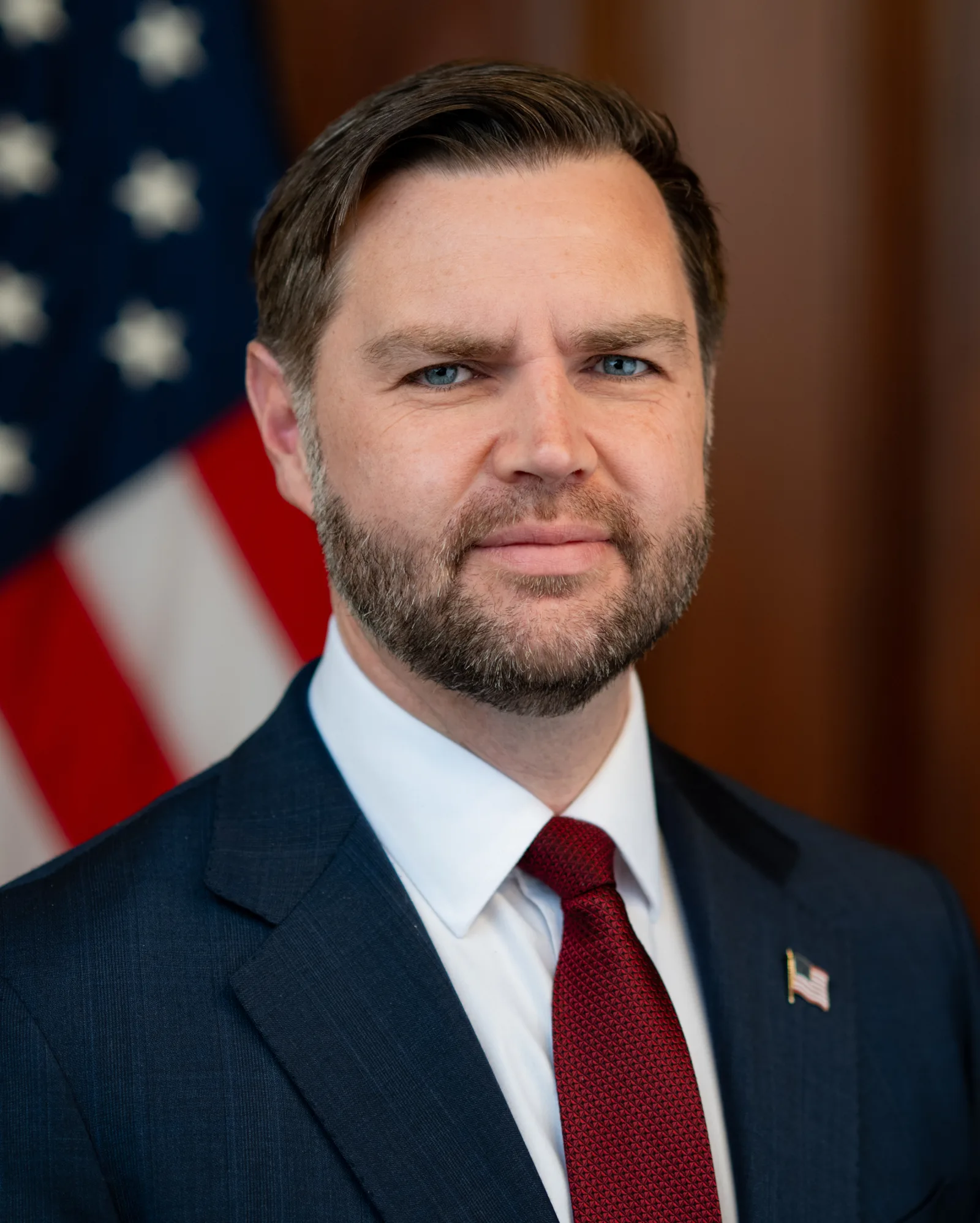 File photo
What happened
Key facts
- JD Vance said Donald Trump would not allow the conflict with Iran to become a “forever war.” (per 8am.media, trtworld.com, israelnationalnews.com).
- Al Jazeera reported that Vance made the remarks during a town hall meeting with voters in Fort Worth, Texas (per 8am.media).
- Vance said the United States had been involved with Iran in some form for seven months (per 8am.media).
- Vance said the United States had been dealing with Iran for 47 years (per 8am.media).
- Vance said opposing lengthy wars did not mean rejecting the use of military force (per 8am.media).
- Vance said Trump would achieve U.S. objectives (per 8am.media, trtworld.com).
- Vance said Trump would focus on other administration priorities after achieving U.S. objectives (per 8am.media).
- Al Jazeera reported that Vance said the United States had been involved with Iran in some form for seven months and dealing with Iran for 47 years (per 8am.media).
The brief
JD Vance said Donald Trump would pursue U.S. objectives in the conflict with Iran without letting it become a prolonged war. Al Jazeera reported that the vice president made the remarks at a town hall meeting with voters in Fort Worth, Texas. The account links Trump’s stated approach to reaching U.S. objectives before the administration turns to other priorities.
Vance described opposition to lengthy wars as compatible with using military force. His comments did not reject force as a policy option; instead, he said that resisting prolonged conflict and using military force are not mutually exclusive. The account does not provide further detail on what military actions Vance was discussing.
Vance placed the relationship with Iran in two time frames. He said the United States had been involved with Iran “in some form for seven months,” and had been dealing with Iran for 47 years. Those figures were part of his remarks at the town hall, as reported by Al Jazeera.
He also connected Trump’s stated objective to the administration’s other work: Vance said Trump would achieve U.S. objectives and then focus on other administration priorities. The account does not specify the objectives or describe how the administration would determine that it had achieved them.
The central point of Vance’s remarks was that Trump would not allow the conflict to become what Vance called a “forever war.” TRT World’s headline likewise says Vance ruled out a “forever war” and would achieve objectives; Israel National News, Middle East Eye and Fox News headlines also describe Vance saying Trump would not let the conflict become one.
Those headlines provide no additional detail about the town hall or the stated objectives. Al Jazeera reported the remarks on Friday, October 30. Vance’s statements set out his description of Trump’s approach: pursue U.S. objectives, retain military force as an option, and shift attention to other administration priorities after the objectives are achieved.
The report presents these points as Vance’s statements, not as a completed outcome of the conflict.
Why it matters
- Vance’s account describes a policy choice with direct stakes for U.S. military involvement: he said opposition to a lengthy war does not rule out using military force.
- The stated sequence—pursue U.S. objectives, then turn to other administration priorities—makes achieving those objectives the condition Vance named for shifting focus.
- Vance’s reference to seven months of involvement and 47 years of dealings with Iran frames his remarks around both recent involvement and a longer relationship.
What to watch next
- Whether Vance or Trump specifies the U.S. objectives Vance said Trump would pursue.
- Whether Vance or Trump describes how the administration would determine that those objectives have been achieved.
- Whether Vance or Trump provides further detail on the military force Vance said remained an option.
How it's being covered
Coverage analysisShow details5 source articles · 5 unique outletsOutlet political mix: Mostly Right· 1 Left · 2 Right · 2 unratedWhere the outlets are based: Middle East 60% · US/Canada 20% · Other 20%
How outlets' accounts compare
Timeline
Developments from this story's sources, dated background we compiled and fact-checked, and our earlier coverage. Each row says which.- In 1953, a CIA- and MI6-backed coup, known as Operation Ajax, overthrew Prime Minister Mohammad Mosaddegh and restored the Shah’s authority.Background · from our historical context
- The Iranian Revolution ended the monarchy and brought a new government to power.Background · compiled and fact-checked by Updat3
- Iranian students seized the U.S. Embassy in Tehran and took its staff hostage.Background · compiled and fact-checked by Updat3
- Hezbollah, founded in Lebanon in 1982 with Iranian support, became one part of Iran’s regional network of allied armed groups.Background · from our historical context
- International scrutiny of Iran’s nuclear activities intensified after disclosures in 2002.Background · from our historical context
- Iran and six world powers signed the Joint Comprehensive Plan of Action (JCPOA) on July 14, 2015, placing limits on Iran’s nuclear program in exchange for sanctions relief.Background · from our historical context
- President Donald Trump announced that the United States was withdrawing from the nuclear agreement and reimposing sanctions.Background · compiled and fact-checked by Updat3
- Iran began exceeding some limits set by the nuclear agreement.Background · compiled and fact-checked by Updat3
- Direct exchanges between Iran and Israel followed in 2024.Background · from our historical context
- Iran launched missiles at Israel after Israeli operations in Lebanon and the killing of Hezbollah leader Hassan Nasrallah.Background · compiled and fact-checked by Updat3
- JD Vance became vice president after Donald Trump’s inauguration.Background · compiled and fact-checked by Updat3
- The United States and Israel launched coordinated strikes across Iran.Background · compiled and fact-checked by Updat3
How we got here
On February 28, 2026, the United States and Israel began coordinated strikes on Iran’s power plants, air defenses and other military infrastructure, opening the conflict that formed the immediate backdrop to later U.S. debate over its objectives and duration.
In 1953, a CIA- and MI6-backed coup, known as Operation Ajax, overthrew Prime Minister Mohammad Mosaddegh and restored the Shah’s authority. The 1979 Iranian Revolution ended the monarchy and the U.S.-aligned relationship with Israel; historians have linked opposition to the Shah’s repression, including that of his intelligence service, SAVAK, to the revolution.
Original sources
1 of 5 articles · Unknown · Show allEvery story links to the reporting it was built from. How we choose sources
Spotted a factual error, a broken link or a misleading summary? Tell us.