
Waltz and Cuba’s foreign minister trade accusations during UN exchange
Mike Waltz and Cuban Foreign Minister Bruno Rodríguez Parrilla exchanged accusations during a heated encounter at the UN General Assembly. Waltz told Rodríguez Parrilla to “back up,” while accounts also describe the Cuban delegation interrupting Waltz and a member apparently reaching for a spokesman’s phone.
AI-assisted synthesis · Based on 6 outlets' reporting · Article text read from 3 of 6 outlets · short excerpt from 1 more · 2 articles captured only in partHow it's made
View timeline · 6 entries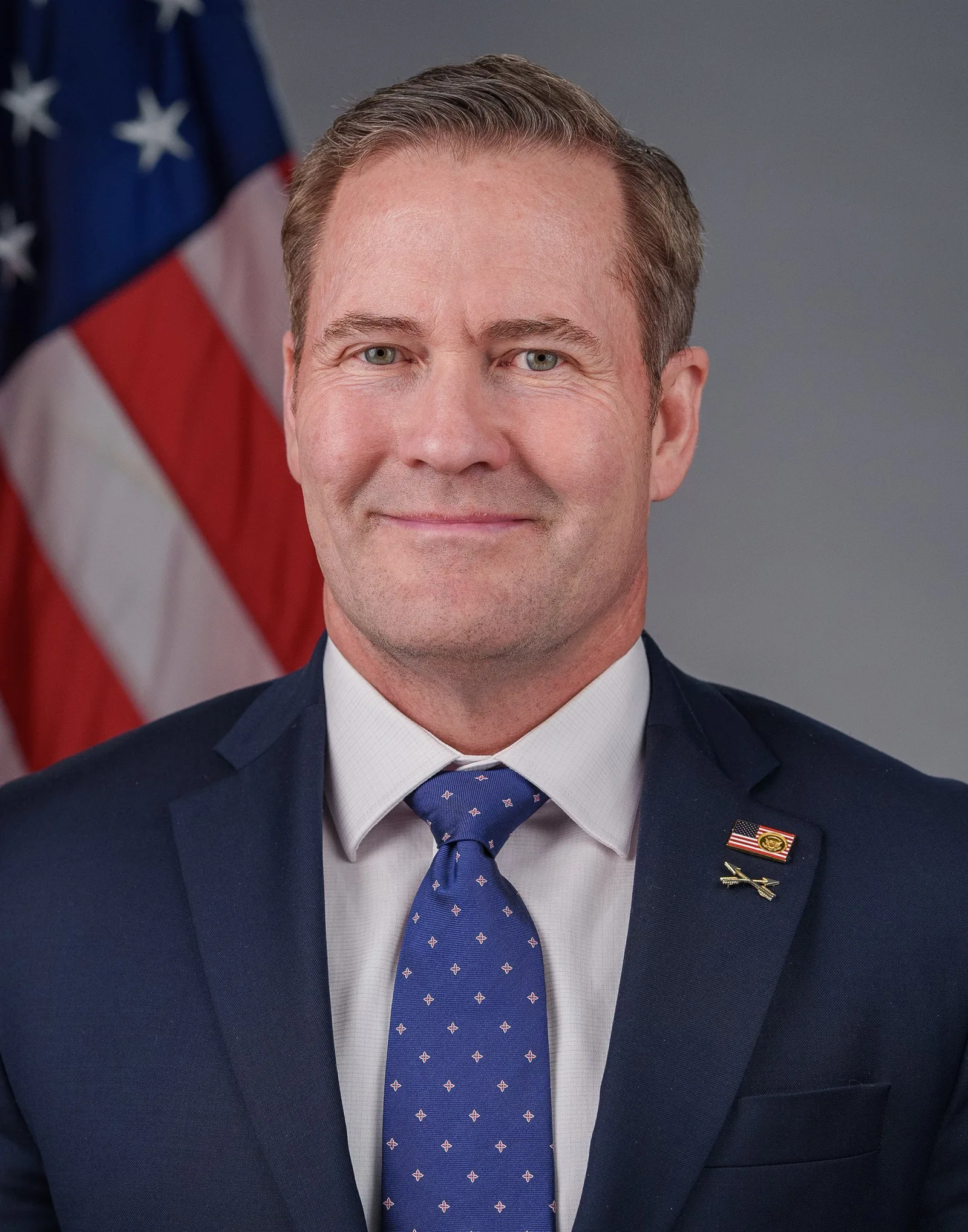 File photo
What happened
Key facts
- Rodríguez Parrilla accused Waltz of dishonesty (per Hindustan Times, Washington Examiner, New York Post).
- Waltz said Rodríguez Parrilla’s point of order was invalid and alleged that he raised it because he objected to Waltz’s remarks (per Washington Examiner, Hindustan Times, New York Post).
- Waltz said the watches’ value would equal 55 years of an average Cuban wage, citing Cuban government statistics (per dailymail.com, Hindustan Times).
- Video showed a Cuban delegation member apparently trying to take spokesman J.P. Freire’s iPhone as Freire recorded the exchange (per New York Post, dailymail.com, Hindustan Times).
The brief
Mike Waltz and Cuban Foreign Minister Bruno Rodríguez Parrilla traded accusations during a heated exchange at the UN General Assembly, where the Cuban delegation interrupted Waltz as he spoke. Waltz told Rodríguez Parrilla to “back up,” while Rodríguez Parrilla accused Waltz of dishonesty, according to Hindustan Times.
The exchange took place ahead of a vote on condemning the US embargo on Cuba. Accounts describe the interruption differently in emphasis. The Washington Examiner says members of the Cuban delegation shouted and banged on their table while Waltz spoke. Hindustan Times says Rodríguez Parrilla walked up to Waltz’s podium and accused him of dishonesty.
The New York Post reports that video showed a delegation member apparently trying to take spokesman J.P. Freire’s iPhone while Freire recorded the exchange; that account describes the attempted grab as apparent, not confirmed. Waltz challenged the interruption and said Rodríguez Parrilla would not intimidate him.
The Washington Examiner reports that Waltz called the Cuban foreign minister’s point of order invalid and alleged that he raised it because he objected to the substance of Waltz’s remarks. The New York Post also reports Waltz comparing the incident to intimidation of political prisoners.
These are Waltz’s claims about Rodríguez Parrilla’s conduct and the reason for the point of order. Waltz also used images of Cuba’s leaders to argue against the Cuban government’s position.
Hindustan Times reports that he displayed an image of Fidel Castro wearing two Rolex watches, each valued at about $40,000, and said the watches’ value equalled 55 years of an average Cuban wage, citing Cuban government statistics. The Daily Mail also describes Waltz showing a photograph of Castro with two watches and making the wage comparison.
Hindustan Times adds that Waltz displayed an image of current Cuban President Miguel Díaz-Canel and said he also wore a Rolex. The confrontation occurred in the context of the dispute over the US embargo, with the planned UN vote on condemning it providing the immediate diplomatic setting.
The sources document the exchange and the competing accusations, but do not report the vote’s outcome. The coverage also does not establish whether the delegation member shown in the New York Post video actually took Freire’s phone.
The accounts foreground different elements: Hindustan Times highlights the accusation of dishonesty and the embargo vote; the Washington Examiner emphasizes the delegation’s interruption and Waltz’s challenge to the point of order; and the New York Post focuses on the phone video and Waltz’s comments about intimidation.
The Daily Mail stresses Waltz’s display of Castro’s watches and the wage comparison. Fox News and Townhall also reported a heated confrontation, with Townhall’s headline emphasizing Waltz’s “Back Up!” remark.
Why it matters
- The exchange took place before a UN vote on condemning the US embargo, putting the Cuban government’s opposition to the embargo and Waltz’s criticism of Cuba in direct public contention.
- Waltz’s comparison tied the roughly $40,000 value he assigned to Castro’s two watches to 55 years of an average Cuban wage, framing the dispute around Cuban living standards.
- The New York Post’s account of video showing a delegation member apparently reaching for J.P. Freire’s phone adds a separate, unconfirmed allegation of physical interference during the diplomatic exchange.
What to watch next
- Whether the UN General Assembly votes on condemning the US embargo on Cuba, and the vote’s outcome.
- Whether the Cuban delegation or Waltz publicly addresses the interruption and the disputed point of order.
- Whether further information establishes what happened to J.P. Freire’s phone during the exchange.
How it's being covered
Coverage analysisShow details8 source articles · 6 unique outletsOutlet political mix: Mostly Right· 1 Center · 5 RightWhere the outlets are based: US/Canada 83% · Asia 17%
- Coverage is currently concentrated among Right-rated outlets (5 of 6 rated sources); comparatively few Left-rated outlets have published on the event.
- Coverage is currently concentrated among outlets based in US/Canada (5 of 6 geographically-identified sources).
How outlets' accounts compare
3 framing differences · 3 uncorroborated claims · 3 information gaps- Hindustan Times foregrounds Rodríguez Parrilla’s accusation that Waltz was dishonest and the vote on condemning the embargo; the Washington Examiner focuses on the Cuban delegation interrupting Waltz and his rejection of the point of order.
- The New York Post highlights video of a delegation member apparently reaching for J.P. Freire’s phone, while the Daily Mail emphasizes Waltz’s display of Castro’s watches and the wage comparison.
- Waltz alleged that Rodríguez Parrilla’s point of order was a response to the substance of Waltz’s remarks; the sources provide no independent confirmation of that explanation.
- Waltz told Rodríguez Parrilla to “back up.”
- Hindustan Times reports that Rodríguez Parrilla accused Waltz of dishonesty.
- Waltz said the watches’ value would equal 55 years of an average Cuban wage, citing Cuban government statistics.
- The sources do not state the outcome of the UN vote on condemning the US embargo.
- The Washington Examiner reports that Waltz called Rodríguez Parrilla’s point of order invalid and alleged it was raised over the substance of his remarks; the sources do not independently establish the validity of the point or Rodríguez Parrilla’s reason for raising it.
- The New York Post says a delegation member apparently tried to grab Freire’s phone; the account does not establish that the phone was taken.
Timeline
Developments from this story's sources, dated background we compiled and fact-checked, and our earlier coverage. Each row says which.- Cuba’s revolutionary government took control of U.S.-owned property.Background · compiled and fact-checked by Updat3
- The United States imposed broad export restrictions on Cuba.Background · compiled and fact-checked by Updat3
- President John F. Kennedy proclaimed a comprehensive U.S. embargo on Cuba.Background · compiled and fact-checked by Updat3
- President Bill Clinton signed the Helms-Burton Act, codifying major parts of the Cuba embargo.Background · compiled and fact-checked by Updat3
- Barack Obama and Raúl Castro announced steps to restore U.S.-Cuba diplomatic relations.Background · compiled and fact-checked by Updat3
- The United States and Cuba reopened their embassies in Havana and Washington.Background · compiled and fact-checked by Updat3
How we got here
In 1959, Cuba’s revolutionary government took control of U.S.-owned property; in 1960, the United States imposed export restrictions, and President John F. Kennedy’s Proclamation 3447 made the embargo comprehensive in February 1962.
The U.S. government has maintained that restrictions were intended to pressure Cuba’s government over property and political rights; Cuba’s government describes the embargo as an unlawful economic blockade that harms its population. The dispute over the policy is the backdrop to the accusations at the UN, not evidence that either side’s claims in the exchange are correct.
Original sources
2 of 8 articles · Asia · Show allEvery story links to the reporting it was built from. How we choose sources
Spotted a factual error, a broken link or a misleading summary? Tell us.