
Warsh holds Fed rates steady as further increases remain possible
The Federal Open Market Committee kept the federal funds target range at 3.75% to 4% in a 10–2 vote, while Kevin Warsh left open the possibility of further rate increases. Warsh pointed to persistent inflation and a strong economy, and his remarks reinforced expectations of a December increase, with another possible in early 2027.
AI-assisted synthesis · Based on 5 outlets' reporting · Article text read from 2 of 5 outletsHow it's made
View timeline · 8 entries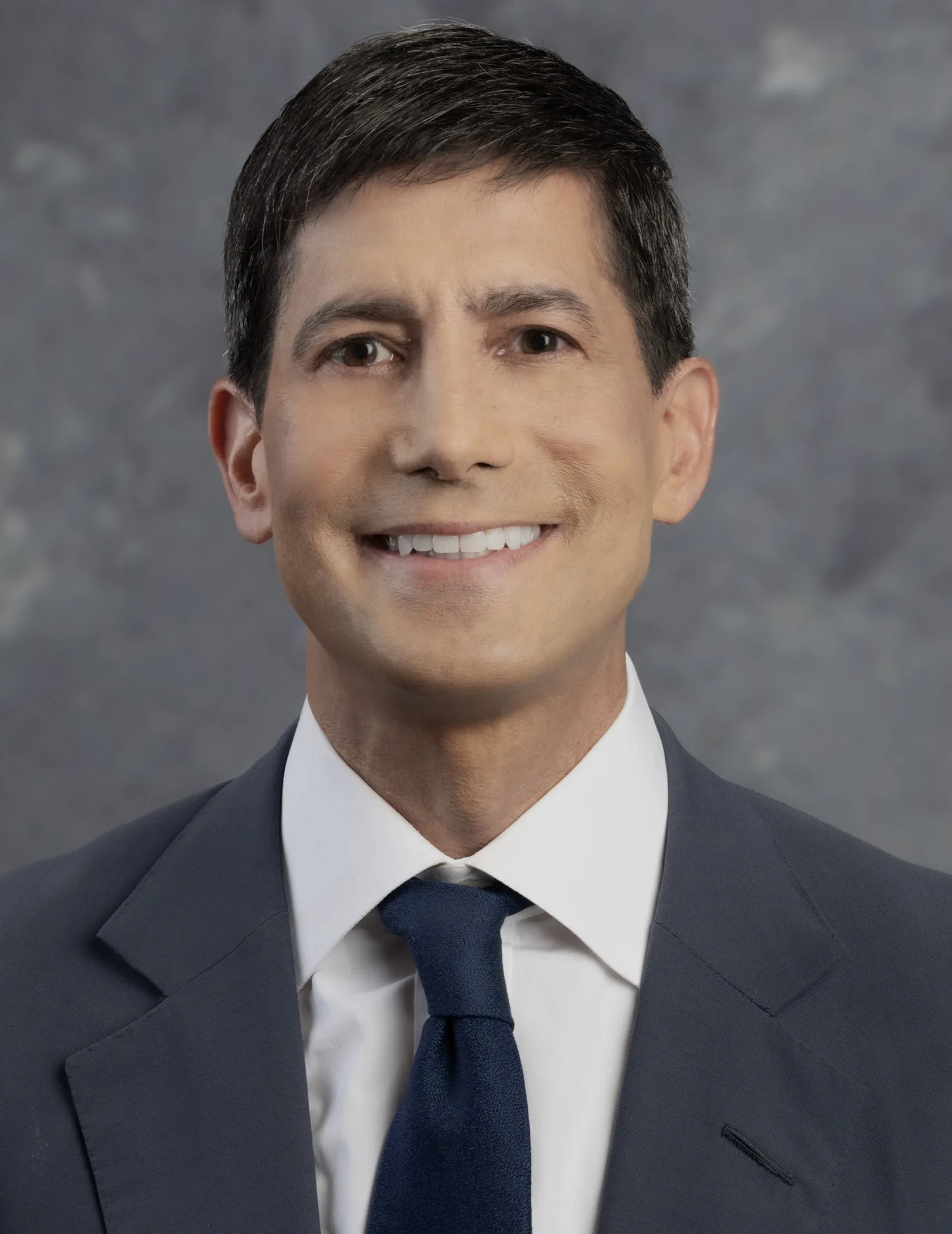 File photo
What happened
Key facts
- Warsh cited a strong economy and persistent inflation as reasons the Federal Reserve's work was not finished (per The Japan Times, see.news, The Washington Post).
- Warsh's remarks reinforced expectations that officials would raise borrowing costs in December, with another increase possible in early 2027 (per The Japan Times).
- Vincent Reinhart, chief economist at BNY Investments, said Warsh signaled further tightening but indicated it might be limited (per The Japan Times).
The brief
The Federal Open Market Committee kept the federal funds target range at 3.75% to 4% in a 10–2 vote, while Federal Reserve Chairman Kevin Warsh signaled that further increases remain possible. The decision leaves rates unchanged for now, but Warsh’s comments kept a December increase in view and did not rule out another move in early 2027.
The Federal Reserve’s policy statement described inflation as elevated and said additional economic data would help guide decisions aimed at returning inflation to its 2% target. The committee also reiterated its commitment to price stability. Its decision balanced the inflation concern against resilient economic activity and uncertainty surrounding geopolitical developments.
Warsh pointed to persistent inflation and a strong economy as signs that the central bank’s work was unfinished. At the same time, he declined to provide explicit guidance on the future path of policy. His remarks therefore conveyed the possibility of more tightening without specifying a schedule or a total number of increases.
The two dissenting votes came from Federal Reserve Governor Lisa D. Cook and Federal Reserve Bank of Cleveland President Beth M. Hammack. Both preferred raising the benchmark rate by 0.25 percentage points rather than leaving the target range unchanged. The 10–2 vote records the committee’s decision and the two officials’ preference for a higher rate.
Warsh’s assessment reinforced expectations that officials would raise borrowing costs in December, while a further increase in early 2027 remained possible. Those are expectations about future policy, not a scheduled decision reported by the sources. Warsh’s refusal to offer explicit guidance leaves the timing and scale of any additional tightening open.
Vincent Reinhart, chief economist at BNY Investments, described Warsh’s signal as pointing toward more tightening while leaving room for it to be limited. That assessment adds a qualification to the prospect of future increases: the direction may be toward higher rates, but the scale is not settled.
The immediate policy outcome, by contrast, is clear—the committee held its target range steady despite the two votes for an increase.
Why it matters
- Borrowers face a benchmark range of 3.75% to 4% for now, while Warsh’s remarks reinforced expectations of a December increase that could raise borrowing costs.
- The Federal Reserve’s stated inflation goal is 2%; it said further economic data will help guide policy toward that target.
- The 10–2 vote and the two officials’ preference for a 0.25-percentage-point increase show a documented divide over whether to tighten policy immediately.
- BNY Investments chief economist Vincent Reinhart said further tightening might be limited, highlighting uncertainty about the scale of any future increases.
What to watch next
- Whether Federal Reserve officials raise borrowing costs in December, as expectations described in the reporting suggest.
- Whether officials consider another rate increase in early 2027, which remains possible.
- What additional economic data the Federal Reserve cites when assessing progress toward its 2% inflation target.
- Whether future policy signals indicate more tightening and whether its scale is limited, as Vincent Reinhart assessed.
How it's being covered
Coverage analysisShow details5 source articles · 5 unique outletsOutlet political mix: Mixed· 2 Left · 2 Center · 1 unratedWhere the outlets are based: US/Canada 40% · Asia 40% · Other 20%
One source is from a wire service (AP, Reuters, AFP or Bloomberg), whose reporting other outlets often republish.
How outlets' accounts compare
2 framing differences · 2 uncorroborated claims · 3 information gaps- The Japan Times foregrounds Warsh’s signal that rates could rise again and reports expectations for a December increase; see.news emphasizes the unchanged rate, the vote count, and the two officials who preferred an increase.
- The Washington Post headline confirms that rates stayed steady, while the MS NOW and Economic Times headlines also foreground elevated or stubborn inflation.
- Warsh declined to offer explicit guidance on the future path of policy, while his remarks reinforced expectations of a December increase.
- Vincent Reinhart said Warsh signaled further tightening but suggested it might be limited.
- The sources do not give household or business borrowing-cost estimates, or quantify how an increase would affect borrowers.
- The sources do not identify the geopolitical developments contributing to uncertainty.
- The reporting does not establish whether officials will approve a December increase or a further increase in early 2027; those are presented as expectations or possibilities.
Timeline
Developments from this story's sources, dated background we compiled and fact-checked, and our earlier coverage. Each row says which.- The Federal Reserve’s institutional roots date to the Federal Reserve Act, signed by President Woodrow Wilson on December 23, 1913.Background · from our historical context
- President Franklin D. Roosevelt signed the Banking Act, which established the modern Federal Open Market Committee structure.Background · compiled and fact-checked by Updat3
- Congress amended the Federal Reserve Act in 1977 to direct the Fed to pursue maximum employment and stable prices.Background · from our historical context
- In January 2012, the FOMC formally adopted a 2% longer-run inflation goal, giving policymakers a benchmark for judging price stability.Background · from our historical context
- The Federal Reserve began raising its target federal funds rate.Background · compiled and fact-checked by Updat3
- That shift followed the period of increases intended to curb inflation, which had reached 9.1% year over year in June 2022, according to the U.S. Bureau of Labor Statistics.Background · from our historical context
- The Federal Reserve raised its federal funds rate target to 5.25%–5.50%.Background · compiled and fact-checked by Updat3
- The FOMC began cutting rates on September 18, 2024, lowering the target range by half a percentage point to 4.75%–5%.Background · from our historical context
How we got here
Before Kevin Warsh’s return to the Federal Reserve’s leadership, he served as a Fed governor from 2006 to 2011, including during the 2008 financial crisis. The Fed’s previous major inflation-fighting cycle began in March 2022, when the Federal Open Market Committee (FOMC) raised its benchmark rate from near zero; by July 2023, it had lifted the target range to 5.25%–5.5%.
The FOMC began cutting rates on September 18, 2024, lowering the target range by half a percentage point to 4.75%–5%. That shift followed the period of increases intended to curb inflation, which had reached 9.1% year over year in June 2022, according to the U.S. Bureau of Labor Statistics.
Original sources
2 of 5 articles · US/Canada · Show allEvery story links to the reporting it was built from. How we choose sources
Spotted a factual error, a broken link or a misleading summary? Tell us.