
Scott Gillingham wins a second Winnipeg term as voters cast 80,206 ballots for him
Winnipeg voters re-elected Scott Gillingham as mayor, with unofficial results showing he received 80,206 votes. Kevin Klein received 41,703 votes, and Gillingham said he would serve residents who did not vote for him.
AI-assisted synthesis · Based on 5 outlets' reporting · Article text read from 3 of 5 outletsHow it's made
View timeline · 7 entries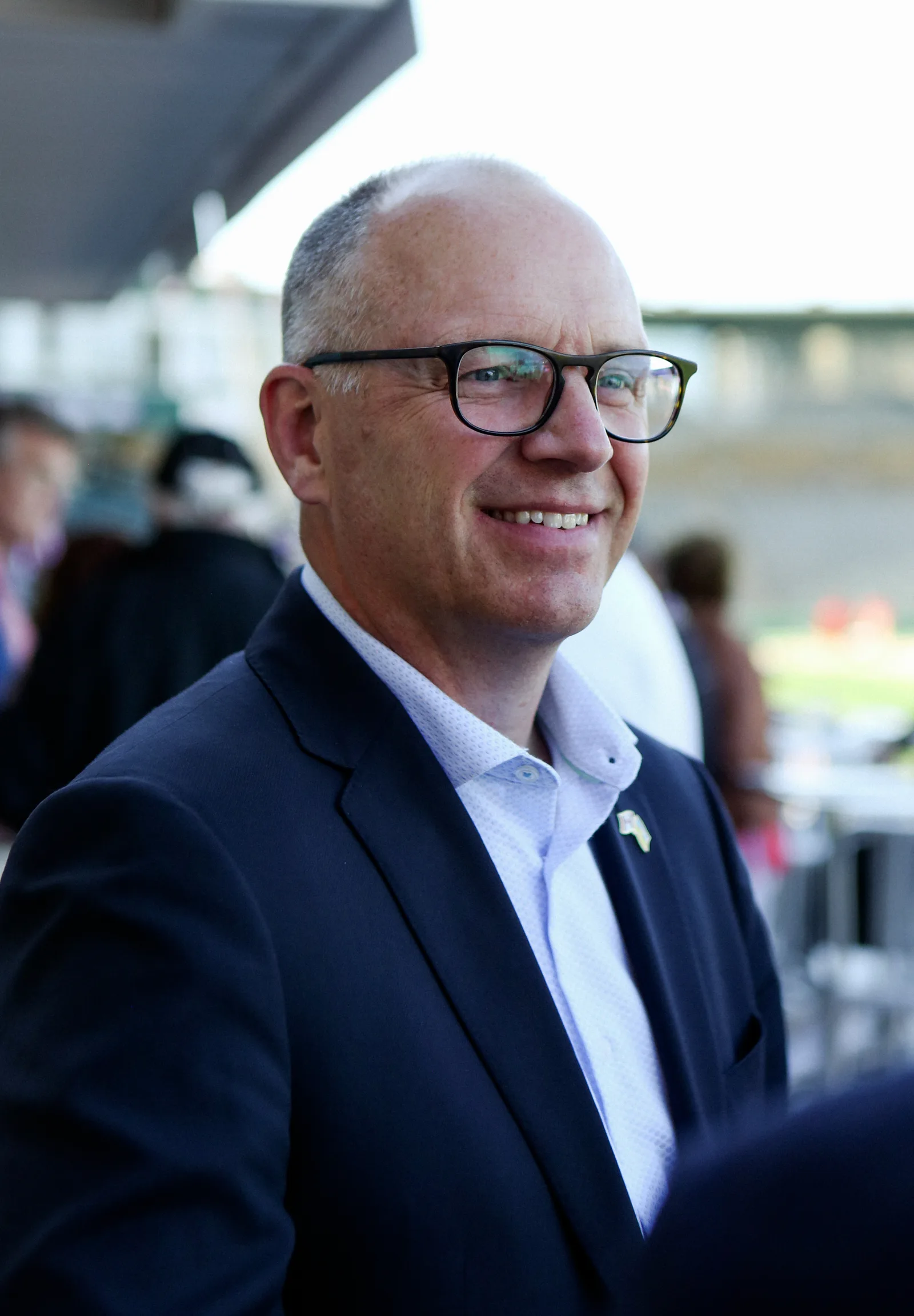 File photo
What happened
Key facts
- Scott Gillingham won a second term as Winnipeg mayor (per citynews.ca, The Globe and Mail, ctvnews.ca).
- Gillingham said his administration had accomplished a lot over the last four years but still had work ahead (per Global News, citynews.ca).
- Gillingham said he would serve residents whether or not they voted for him (per The Globe and Mail).
The brief
Winnipeg voters re-elected Scott Gillingham as mayor, giving him a second term and 80,206 votes in unofficial results. Kevin Klein received 41,703 votes, while Noah Redden received 39,962 and Mike Vogiatzakis received 19,463, according to the reported count. The results put Gillingham ahead of his closest listed challengers by a substantial margin.
Global News reported that Gillingham defeated 11 other candidates and won roughly 40 per cent of the vote. It described Klein, a former Progressive Conservative MLA, and Redden as each receiving around 20 per cent.
The Globe and Mail reported the exact unofficial totals for the leading candidates and identified Redden as a software developer and Vogiatzakis as a funeral home director. Its account gives more detail on individual vote totals than the percentage estimates reported by Global News. Gillingham said in his victory speech that residents had entrusted him with another term.
He said his administration had accomplished a lot during the preceding four years, while stressing that further work remained. CityNews reported that he addressed residents who had not supported him and said their voices would matter; The Globe and Mail likewise reported his pledge to serve residents regardless of how they voted.
Gillingham named crime, homelessness, addiction and mental health among the concerns he shares with Winnipeg residents. The Globe and Mail said the campaign had been dominated by issues including housing and public safety.
Those accounts describe the concerns he cited and the topics prominent in the campaign, rather than establishing a single issue as the reason voters chose him. Klein conceded after losing, according to CityNews, and Global News quoted him saying that defeating an incumbent is difficult.
Global News also reported that the mayoral projection came roughly 50 minutes after polls closed. The Globe and Mail said Gillingham was humbled by the support and reported that he planned a Friday news conference to conclude his campaign and announce his next steps.
The accounts emphasize different aspects of the result: Global News highlights the crowded field, approximate vote shares and the rapid projection, while CityNews focuses on Gillingham’s remarks about crime, homelessness and addiction. The Globe and Mail supplies exact unofficial totals and Gillingham’s commitment to represent non-supporters.
Together, the reporting presents a decisive re-election result alongside the issues and responsibilities Gillingham said would shape his next term.
Why it matters
- Winnipeg voters who raised concerns about crime, homelessness, addiction and mental health are among the residents Gillingham said he would serve during his second term.
- The unofficial count recorded 80,206 votes for Gillingham and 41,703 for Klein, defining the electoral margin that returned Gillingham to office.
- Gillingham said housing and public safety were among campaign issues, while he specifically identified crime, homelessness, addiction and mental health as continuing concerns.
What to watch next
- Whether Gillingham holds the Friday news conference reported by The Globe and Mail and announces his next steps.
- How Gillingham addresses the crime, homelessness, addiction and mental-health concerns he identified.
- Whether Gillingham follows through on his pledge to represent residents who did not vote for him.
How it's being covered
Coverage analysisShow details6 source articles · 5 unique outlets · 3 distinct reportsOutlet political mix: Center Only· 5 CenterWhere the outlets are based: Unknown 60% · US/Canada 40%
- Coverage is currently concentrated among Center-rated outlets (5 of 5 rated sources); comparatively few Left or Right-rated outlets have published on the event.
How outlets' accounts compare
3 framing differences · 2 uncorroborated claims- Global News emphasizes the number of candidates, approximate vote shares and how soon the mayoral projection followed poll closing.
- CityNews centers Gillingham’s comments about crime, homelessness, addiction and mental health.
- The Globe and Mail provides exact unofficial vote totals and highlights Gillingham’s commitment to serve residents regardless of their vote.
- Global News quotes Klein saying, “It’s very hard to beat an incumbent.”
- CityNews reports Gillingham said residents’ voices would matter whether or not they voted for him.
Timeline
Developments from this story's sources, dated background we compiled and fact-checked, and our earlier coverage. Each row says which.- The resulting unified city replaced the former Metropolitan Corporation of Greater Winnipeg, which had coordinated regional services among separate municipalities since 1960.Background · from our historical context
- The modern municipal structure dates to January 1, 1972, when Winnipeg amalgamated with 12 surrounding municipalities under the *City of Winnipeg Act*.Background · from our historical context
- Manitoba’s *Municipal Councils and School Boards Elections Act* governs municipal elections, while the *City of Winnipeg Charter*, enacted in 2002, sets out the city’s municipal powers and governance framework.Background · from our historical context
- Before becoming mayor, Gillingham represented St. James-Brooklands-Weston on city council from 2014 and chaired the council’s finance committee.Background · from our historical context
- He had first defeated incumbent Sam Katz in the October 22, 2014, election.Background · from our historical context
- Winnipeg re-elected Brian Bowman as mayor.Background · compiled and fact-checked by Updat3
- Scott Gillingham first became Winnipeg mayor in the October 26, 2022, municipal election, winning 27,821 votes in a field that included former mayor Glen Murray.Background · from our historical context
How we got here
Scott Gillingham first became Winnipeg mayor in the October 26, 2022, municipal election, winning 27,821 votes in a field that included former mayor Glen Murray. Brian Bowman, elected in 2014 and re-elected in 2018, had announced in 2021 that he would not seek another term. Before becoming mayor, Gillingham represented St.
James-Brooklands-Weston on city council from 2014 and chaired the council’s finance committee. Winnipeg’s four-year municipal election cycle made the 2022 vote the immediate electoral test preceding the next mayoral contest.
Original sources
4 of 6 articles · Unknown · Show allEvery story links to the reporting it was built from. How we choose sources
Spotted a factual error, a broken link or a misleading summary? Tell us.