
World Bank’s Ajay Banga vows to quintuple critical minerals financing in five years, cites $112bn private mobilisation
World Bank President Ajay Banga said the institution plans to quintuple its critical minerals business over the next five years. He said private capital mobilisation rose from about $35 billion in fiscal 2022 to $112 billion last year and that total financing topped $230 billion when combined with the World Bank Group's own financing.
AI-assisted synthesis · Based on 4 independent reports from 5 outlets · Full text read from 1 of 4 reportsHow it's made
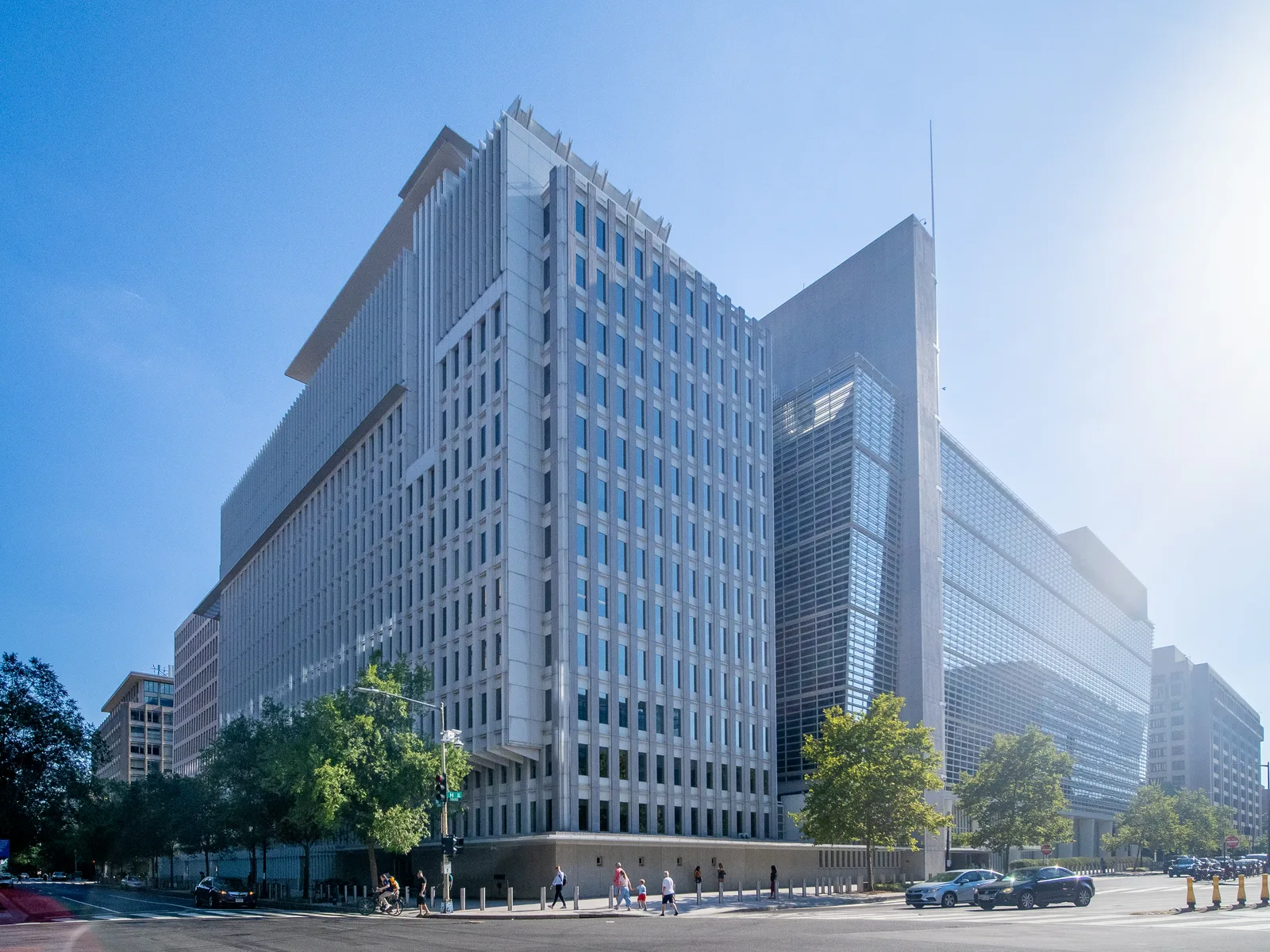 File photo
What happened
Key facts
- Ajay Banga said the World Bank plans to quintuple its critical minerals business in five years (per ianslive.in, euronext.com, CNA).
- Banga said private capital mobilisation increased from approximately $35 billion in fiscal 2022 to $112 billion last year (per ianslive.in).
- Banga said investors from 110 countries provided capital last year (per ianslive.in).
- Banga said the institution had identified 20 countries as potential partners for the critical minerals initiative (per ianslive.in).
- The World Bank's expansion goal for critical minerals was announced in a Washington report dated Oct 16 that quoted Banga (per ianslive.in).
- Banga said 'the jobs gap is a projection' in remarks carried by the report (per ianslive.in).
The brief
World Bank President Ajay Banga told a Washington audience that the institution aims to expand its critical minerals business fivefold over the coming five years.
In remarks carried by IANS, Banga placed that pledge at the centre of a wider account of private capital mobilisation by the World Bank Group and said the initiative would involve partnership with a set of countries the institution has identified. Banga said the World Bank had identified 20 countries as potential partners for the critical minerals drive.
Banga described a sharp rise in private finance flowing through the World Bank Group. He said private capital mobilisation rose threefold from about $35 billion in fiscal 2022 to $112 billion last year, and that when combined with the group's own financing total financing exceeded $230 billion.
He also said investors from 110 countries provided capital last year, and that the United States, the United Kingdom and India led those investment flows. The president drew attention to a persistent shortfall in commercial investment for the world's poorest economies, saying private capital mobilisation in low-income countries remained around $3 billion.
That figure, Banga said, highlights the continuing difficulty of attracting private funds to low-income countries even as overall mobilisation grows. Banga framed the critical minerals expansion as part of the World Bank's broader effort to marshal public and private resources for development projects.
The IANS report quotes him noting the scale of recent mobilisation and linking the critical minerals plan to the institution's wider financing strategy. He also told the audience that "the jobs gap is a projection," language the report records without further elaboration.
The single-source reporting limits public detail on the mechanics of the critical minerals programme in this account: the IANS text reports the five-year quintuple goal, the 20 potential partner countries and the mobilisation figures, but it does not list which countries will be partners, the precise financing instruments to be used, or how the programme will be governed.
The IANS article is reflected in headlines from Euronext, CNA, Reuters and MarketScreener that likewise summarise Banga's stated five-year target.
For now, the World Bank's stated ambitions rest on Banga's public remarks and the mobilisation figures he presented; the IANS account supplies the figures and the institution-level goals but does not supply additional documentation or a detailed timetable for implementation.
Why it matters
- Low-income countries bear concrete financing shortfalls: private capital mobilisation in low-income countries remained about $3 billion, which signals limited commercial funding reaching those specific economies according to Banga.
- Investors from 110 countries supplied capital last year, showing that private capital mobilisation is concentrated across many jurisdictions and that the United States, the United Kingdom and India were leading sources as named by Banga.
- If implemented, a fivefold expansion in the World Bank's critical minerals business would require new partner arrangements with the 20 countries the institution has identified, creating contractual and governance commitments between the World Bank and those named partners.
What to watch next
- Whether the World Bank publicly names the 20 countries it has identified as potential partners for the critical minerals initiative.
- Whether the World Bank publishes a detailed implementation plan specifying the financing instruments and governance for the five-year, fivefold expansion.
- Whether updated World Bank disclosures revise private capital mobilisation figures from the reported $112 billion or the reported total financing above $230 billion.
How it's being covered
Coverage analysisShow details5 source articles · 5 unique outlets · 3 distinct reportsCoverage mix: Center Only· 4 CenterWhere the outlets are based: Europe 40% · Asia 40% · Other 20%
- Coverage is currently concentrated among Center-rated outlets (4 of 4 rated sources); comparatively few Left or Right-rated outlets have published on the event.
One source is from a wire service (AP, Reuters, AFP or Bloomberg), whose reporting other outlets often republish.
How outlets' accounts compare
How we got here
Immediate backdrop: Ajay Banga took office as World Bank Group president on June 2, 2023, positioning the institution to prioritize finance for energy-transition inputs in his early speeches and strategy documents. National policy responses included the U.S.
Inflation Reduction Act (August 2022), which created incentives for domestic clean-energy supply chains, and the European Union’s Critical Raw Materials Act (proposed in March 2023 and adopted in 2023 negotiations), which aimed to secure EU mineral supplies.
Original sources
2 of 5 articles · Asia · Show allEvery story links to the reporting it was built from. How we choose sources
Spotted a factual error, a broken link or a misleading summary? Tell us.