
UN report projects 2.6C warming under climate pledges, 2.8C under current policies
The United Nations’ Emissions Gap Report projects 2.6C of warming by 2100 if countries meet their latest unconditional climate pledges. It puts warming at 2.8C under current policies and says emissions must fall 6% annually through 2035 for a 50% chance of returning to 1.5C after an overshoot.
AI-assisted synthesis · Based on 4 outlets' reporting · Article text read from 2 of 4 outletsHow it's made
View timeline · 8 entries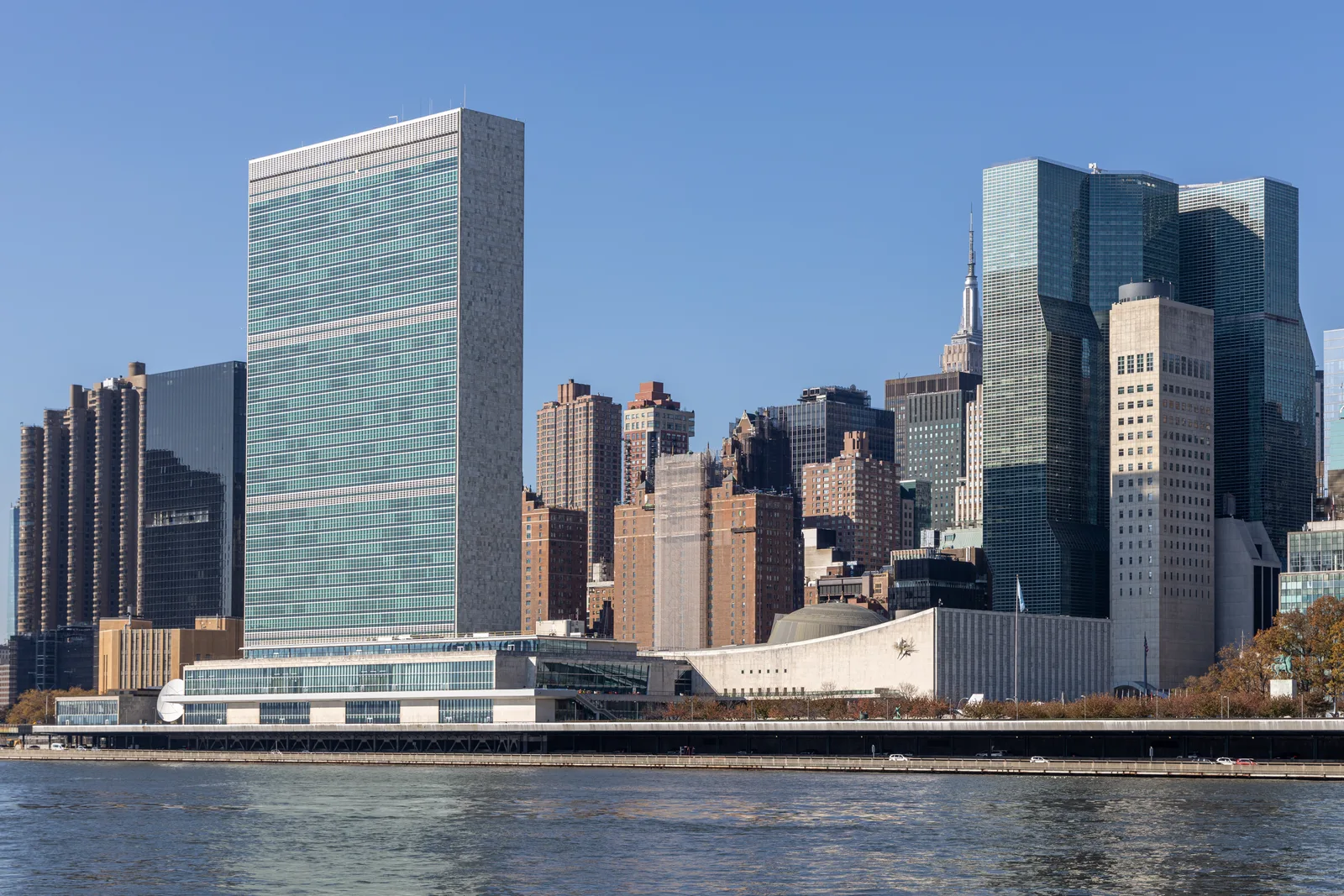 File photo
What happened
Key facts
- The report says global greenhouse gas emissions remained at record levels in 2025, broadly matching the unprecedented highs recorded in 2024 (per streamlinefeed.co.ke).
- The report says emissions must fall 6% annually through 2035 to give the world a 50% chance of returning to 1.5C after an overshoot (per streamlinefeed.co.ke).
- The report says the window to limit warming to 1.5C has effectively closed (per streamlinefeed.co.ke).
- UN Secretary-General António Guterres called the findings a “historic failure of political leadership” and said national climate plans fall short of Paris Agreement goals (per streamlinefeed.co.ke, newscord.org).
- The report says 124 countries that increased emissions added 189 million tons of carbon dioxide in 2025, with 70% of that increase coming from the U.S (per newscord.org).
The brief
The United Nations’ Emissions Gap Report projects that the world will warm by 2.6C by 2100 if countries fully deliver their latest unconditional climate pledges. Under current policies, the report puts the projection at 2.8C, a figure also stated in the Financial Times headline.
The projections describe different policy conditions, rather than conflicting estimates for the same scenario. The report says global greenhouse gas emissions remained at record levels in 2025, broadly matching the unprecedented highs recorded in 2024.
Streamlinefeed.co.ke reports that the report found emissions growth had slowed among several G20 members, while identifying the United States as a major exception. Newscord.org adds a more specific account of recent increases: 124 countries that raised emissions added 189 million tons of carbon dioxide in 2025, and the report attributed 70% of that increase to the U.S.
The figures show the scale of the gap between current action and the report’s temperature goals. The report says the window to limit warming to 1.5C has effectively closed. It also says emissions would have to drop 6% each year through 2035 to give the world a 50% chance of returning to 1.5C after temperatures overshoot that threshold.
UNEP Executive Director Inger Andersen, as quoted by Newscord.org, said emissions cuts of 18% by 2030 and 69% by 2040 are “the only way” to get back to a manageable path.
Those milestones describe a steeper reduction trajectory than the annual 6% figure through 2035; the accounts present them as separate measures of the cuts needed, rather than explaining how the calculations relate. UN Secretary-General António Guterres said the world is falling “dangerously short” of revised goals.
Streamlinefeed.co.ke also reports that he called the findings a “historic failure of political leadership” and said national climate plans fall short of Paris Agreement goals. The report’s assessment therefore links the temperature projections to the distance between countries’ plans and the emissions cuts it says are needed.
The United States figures add a country-specific dimension to that assessment. Newscord.org quotes Australian climate scientist Bill Hare criticizing U.S. efforts to block renewable energy while promoting and subsidizing coal, and says he considered the report’s scientific basis sound.
His remarks are an attributed assessment; the report figures themselves describe the emissions increase and the U.S. share without establishing a motive for that increase.
For governments, the concrete benchmark in the report is the pace and scale of emissions reductions: 6% annually through 2035 for a 50% chance of returning to 1.5C after an overshoot, alongside the 18% and 69% reduction milestones Andersen cited for 2030 and 2040.
The projections place current policies above the outcome associated with full implementation of unconditional pledges, while the report says even those pledges would not keep warming to 1.5C.
Why it matters
- Countries facing the report’s temperature projections bear the climate risks associated with warming of 2.6C under unconditional pledges and 2.8C under current policies; the report says the 1.5C limit has effectively moved out of reach without a return after overshoot.
- People exposed to climate impacts face the stakes of the emissions trajectory: the report says annual cuts of 6% through 2035 would give the world a 50% chance of returning to 1.5C after overshoot.
- The report attributes 70% of the 189 million tons of carbon dioxide added in 2025 by 124 countries with rising emissions to the U.S., making its emissions trend a prominent part of the reported increase.
- Governments’ national climate plans are the policy mechanism at issue: Guterres said they fall short of Paris Agreement goals, while the report projects 2.6C even if countries fully implement unconditional pledges.
What to watch next
- Whether governments strengthen national climate plans beyond their latest unconditional pledges, which the report says still imply 2.6C of warming by 2100.
- Whether emissions begin falling at the report’s stated pace of 6% annually through 2035.
- Whether emissions reductions reach the 18% by 2030 and 69% by 2040 figures cited .
- Whether the U.S. emissions trend changes, given the report’s attribution of 70% of the 2025 increase among 124 countries with rising emissions to the U.S.
How it's being covered
Coverage analysisShow details4 source articles · 4 unique outletsOutlet political mix: Too few rated· 1 Center · 3 unratedWhere the outlets are based: Europe 50% · US/Canada 25% · Other 25%
How outlets' accounts compare
2 framing differences · 3 uncorroborated claims · 3 information gaps- Streamlinefeed.co.ke emphasizes the 2.6C projection under unconditional pledges, the 2.8C current-policies trajectory, and the report’s call for annual cuts through 2035; the Financial Times headline foregrounds the 2.8C projection and rising U.S. emissions.
- Newscord.org emphasizes the 124 countries’ added emissions and the U.S. share, as well as quotes from Inger Andersen and Bill Hare.
- António Guterres called the findings a “historic failure of political leadership” and said the world is falling “dangerously short” of revised goals.
- Inger Andersen said emissions cuts of 18% by 2030 and 69% by 2040 are “the only way” to return to a manageable path.
- Bill Hare criticized U.S. efforts on renewables and coal and said the report’s scientific basis was sound.
- The sources do not detail specific climate impacts, affected populations, or regional consequences associated with the projections.
- The sources do not provide country-by-country emissions figures beyond the reported U.S. share of the increase.
- The sources do not reconcile the 6% annual reduction through 2035 with Andersen’s cited targets of 18% by 2030 and 69% by 2040.
Timeline
Developments from this story's sources, dated background we compiled and fact-checked, and our earlier coverage. Each row says which.- Countries adopted the UN Framework Convention on Climate Change.Background · compiled and fact-checked by Updat3
- Countries adopted the Kyoto Protocol, setting emissions targets for many industrialized countries.Background · compiled and fact-checked by Updat3
- The UN’s annual *Emissions Gap Report*, first published in 2010, compares projected emissions under existing policies and national pledges with pathways consistent with those temperature goals.Background · from our historical context
- Countries adopted the Paris Agreement, which requires them to submit and periodically strengthen national climate pledges.Background · compiled and fact-checked by Updat3
- It set the goal of holding warming “well below” 2°C and pursuing efforts to limit it to 1.5°C; the agreement entered into force on November 4, 2016.Background · from our historical context
- The scientific basis for the 1.5°C benchmark was sharpened in October 2018, when the Intergovernmental Panel on Climate Change published its special report on warming of 1.5°C.Background · from our historical context
- Countries adopted the first global stocktake under the Paris Agreement, concluding that the world was not on track to meet its goals.Background · compiled and fact-checked by Updat3
- The UN Environment Programme’s Emissions Gap Report projected 3.1°C of warming under current policies and 2.8°C if countries met their unconditional pledges.Background · compiled and fact-checked by Updat3
How we got here
The closest precedent was the UN Environment Programme’s *Emissions Gap Report 2024*, which estimated that warming by 2100 would reach 3.1°C under then-current policies, 2.8°C if countries met their unconditional Paris Agreement pledges, and 2.6°C if they also met conditional pledges.
The report warned that countries’ 2030 emissions plans needed much larger cuts to align with the Paris temperature goals.
Original sources
2 of 4 articles · Europe · Show allEvery story links to the reporting it was built from. How we choose sources
Spotted a factual error, a broken link or a misleading summary? Tell us.