
Becerra would consider mileage tax as California governor hopeful
Xavier Becerra said he would consider charging drivers by the mile to help fund maintenance of California’s roads and bridges. He also questioned whether electric-vehicle drivers should contribute to road repairs because they do not buy gasoline.
AI-assisted synthesis · Based on 4 outlets' reporting · Article text read from 3 of 4 outletsHow it's made
View timeline · 9 entries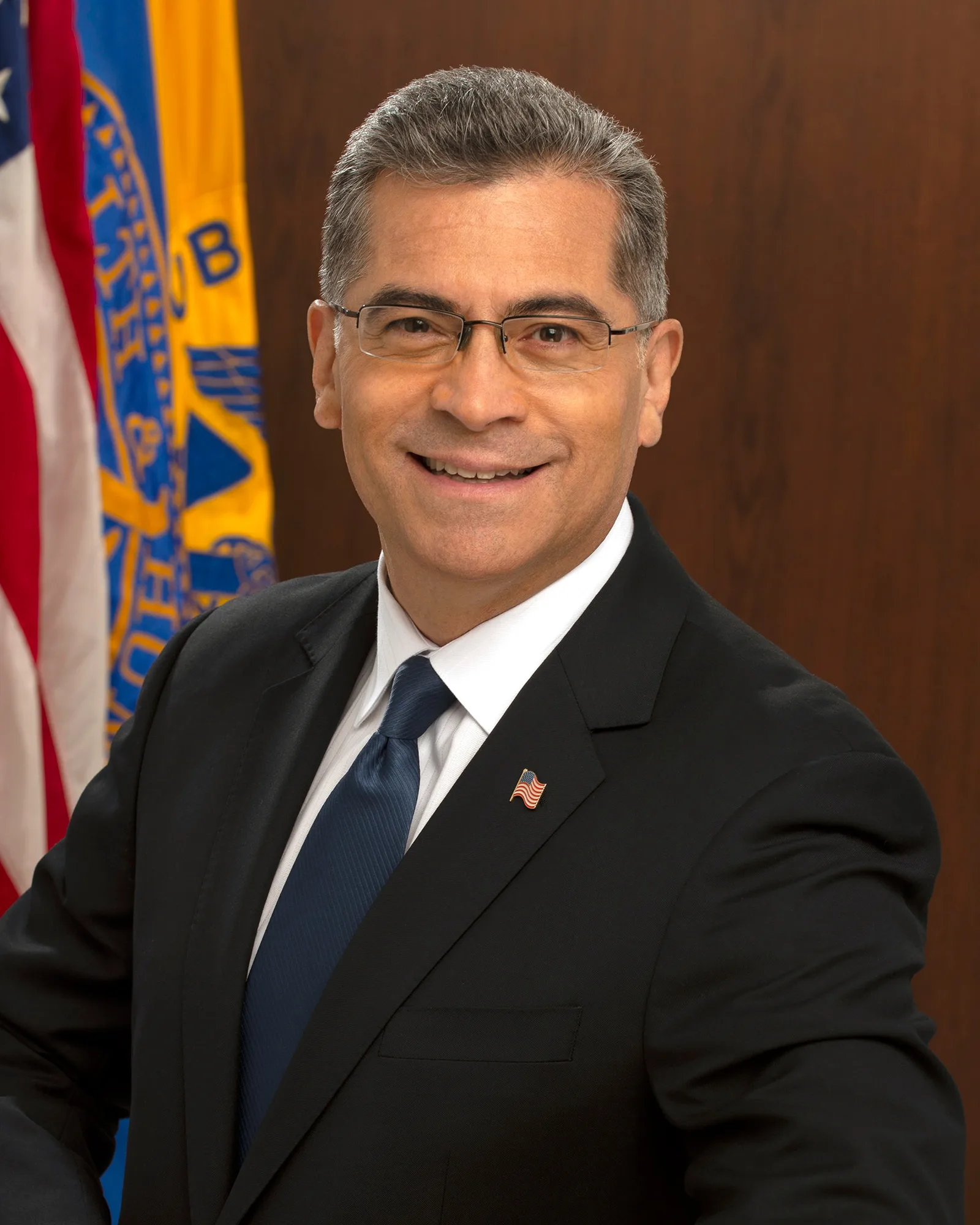 File photo
What happened
Key facts
- California gubernatorial hopeful Xavier Becerra said he would consider a mileage-based tax to help fund road and bridge maintenance (per New York Post, jewishjournal.com, kcra.com).
- Becerra said, “Everything should be on the table,” when asked whether he would support a mileage-based tax as governor (per New York Post).
- Becerra said California’s roads need funding for maintenance (per New York Post, jewishjournal.com, kcra.com).
- Becerra questioned whether electric-vehicle drivers should help pay for road repairs because they do not buy gasoline (per New York Post).
- Democrat Xavier Becerra and Republican Steve Hilton are competing to succeed term-limited California Democratic Gov. Gavin Newsom (per jewishjournal.com).
- Becerra said he believes people sleeping outside should not be treated as criminals, while Hilton called for removing homeless encampments (per jewishjournal.com).
The brief
Xavier Becerra said he would consider a mileage-based tax to fund upkeep of California’s roads and bridges, putting a potential charge on drivers’ miles among the options he would examine as a candidate for governor. In an interview with KCRA’s Ashley Zavala, Becerra said, “Everything should be on the table,” when asked whether he would support such a tax as governor.
Becerra’s stated rationale was that the state’s roads need money for maintenance. He also raised whether electric-vehicle drivers should contribute to repairs, noting that they do not buy gasoline. The proposal would therefore link road funding to miles driven rather than relying solely on fuel purchases, though Becerra’s comments do not set out a tax rate or a specific plan.
The mileage-tax discussion sits within a California governor’s race featuring Becerra, a Democrat, and Republican Steve Hilton. The Jewish Journal identifies them as candidates to succeed term-limited Gov. Gavin Newsom.
Its account presents a broader contrast in their stated approaches to government and household costs: Hilton argued that government should take less money, while Becerra defended the idea that wealthy taxpayers should pay their fair share in comments carried by KCRA. The outlets’ emphasis varies.
The New York Post focuses on Becerra’s openness to a mileage charge and his concern about how electric-vehicle drivers contribute to road repairs. The Jewish Journal excerpt instead highlights the candidates’ competing positions on taxes, housing, homelessness and Proposition 36.
Those other issues provide campaign context, but the excerpts do not connect them to the road-funding proposal. On homelessness, Becerra said people sleeping outside should not be treated as criminals and described noncriminal support, including treatment for people with drug addiction. Hilton called for removing homeless encampments.
On housing costs, Hilton said Becerra had not explained how he would reduce them. These are the candidates’ stated positions as reported by the Jewish Journal, not details of a mileage-tax policy. KCRA’s excerpt also includes Becerra’s comments on tax policy, saying he has worked on it for more than 20 years in Congress and that policy should be fair, predictable and stable.
The excerpt does not specify how that experience would shape a mileage-based charge. His remarks establish openness to considering the idea, rather than a commitment to enact it. The immediate policy question is what details Becerra would offer if he develops the idea: the amount drivers would pay, how miles would be measured and how the revenue would support road upkeep.
None of those terms appears in his reported comments, leaving the mileage tax at the level of a possibility he says should remain under consideration.
Why it matters
- California drivers could face a charge tied to miles traveled if a mileage tax were adopted; Becerra has not stated a rate or proposed a specific plan.
- Electric-vehicle drivers are central to Becerra’s funding question because they do not buy gasoline, the source of the payment distinction he raised.
- The stated purpose is to fund maintenance of California roads and bridges, which Becerra said need funding.
- California voters are choosing between Becerra and Steve Hilton to succeed term-limited Gov. Gavin Newsom, with their reported positions differing on government revenue and other campaign issues.
What to watch next
- Whether Becerra turns his stated openness to a mileage tax into a specific proposal.
- Whether Becerra explains how a mileage-based charge would be measured and what drivers would pay.
- Whether Becerra specifies how revenue from a mileage tax would fund road and bridge maintenance.
- How Becerra and Steve Hilton present their competing views on government revenue during the California governor’s race.
How it's being covered
Coverage analysisShow details5 source articles · 4 unique outletsOutlet political mix: Mostly Center· 2 Center · 1 Right · 1 unratedWhere the outlets are based: US/Canada 75% · Unknown 25%
- Coverage is currently concentrated among outlets based in US/Canada (3 of 4 geographically-identified sources).
How outlets' accounts compare
1 framing difference · 3 uncorroborated claims · 1 information gap- The New York Post centers Becerra’s willingness to consider a mileage-based charge and the question of contributions from electric-vehicle drivers; the Jewish Journal excerpt focuses on the candidates’ wider differences on taxes, housing and homelessness.
- Becerra said he would consider a mileage tax, but the reported comments do not establish a tax rate, measurement method or commitment to adopt one.
- Becerra said, “Everything should be on the table,” when asked about a mileage-based tax.
- Becerra questioned whether electric-vehicle drivers should contribute to road repairs because they do not buy gasoline.
- The excerpts do not explain how California currently funds road maintenance, provide estimates of road upkeep costs, or assess how a mileage charge would affect different categories of drivers.
Timeline
Developments from this story's sources, dated background we compiled and fact-checked, and our earlier coverage. Each row says which.- The state’s road-repair funding framework also included a major earlier measure: Proposition 1B, approved by California voters on Nov. 7, 2006.Background · from our historical context
- California’s earlier test of mileage-based road funding began with Senate Bill 1077, signed by Gov. Jerry Brown on Sept. 29, 2014, which created a state road-charge pilot program.Background · from our historical context
- California began a pilot examining ways to charge drivers by miles traveled.Background · compiled and fact-checked by Updat3
- Gov. Jerry Brown signed Senate Bill 1, raising fuel taxes and vehicle fees to fund transportation, including an annual fee for zero-emission vehicles.Background · compiled and fact-checked by Updat3
- Its final report, delivered to the Legislature in December 2017, documented several ways a future system could track mileage, but did not establish a statewide charge.Background · from our historical context
- California delivered its road-charge pilot report to the Legislature.Background · compiled and fact-checked by Updat3
- Gavin Newsom was elected governor of California.Background · compiled and fact-checked by Updat3
- In 2021, the Legislature passed Senate Bill 339, directing the California Transportation Commission to conduct another road-charge pilot.Background · from our historical context
- The measure was signed by Brown’s successor, Gov. Gavin Newsom, on Oct. 8, 2021.Background · from our historical context
How we got here
California’s earlier test of mileage-based road funding began with Senate Bill 1077, signed by Gov. Jerry Brown on Sept. 29, 2014, which created a state road-charge pilot program. The pilot ran from July 2016 through March 2017 and examined ways to charge drivers according to miles traveled rather than gasoline purchased.
Its final report, delivered to the Legislature in December 2017, documented several ways a future system could track mileage, but did not establish a statewide charge. The pilot arose as California relied heavily on fuel taxes to pay for transportation infrastructure.
Original sources
1 of 5 articles · Unknown · Show allEvery story links to the reporting it was built from. How we choose sources
Spotted a factual error, a broken link or a misleading summary? Tell us.