
Iran’s Revolutionary Guard claims mines exploded three fuel ships in Strait of Hormuz
Iran’s Revolutionary Guard claimed a supertanker and two other fuel ships exploded after striking mines in the Strait of Hormuz. The claims remain unverified, while the US said it had cleared the strait’s recognized primary transit routes.
AI-assisted synthesis · Based on 8 outlets' reporting · Article text read from 2 of 8 outletsHow it's made
View timeline · 16 entries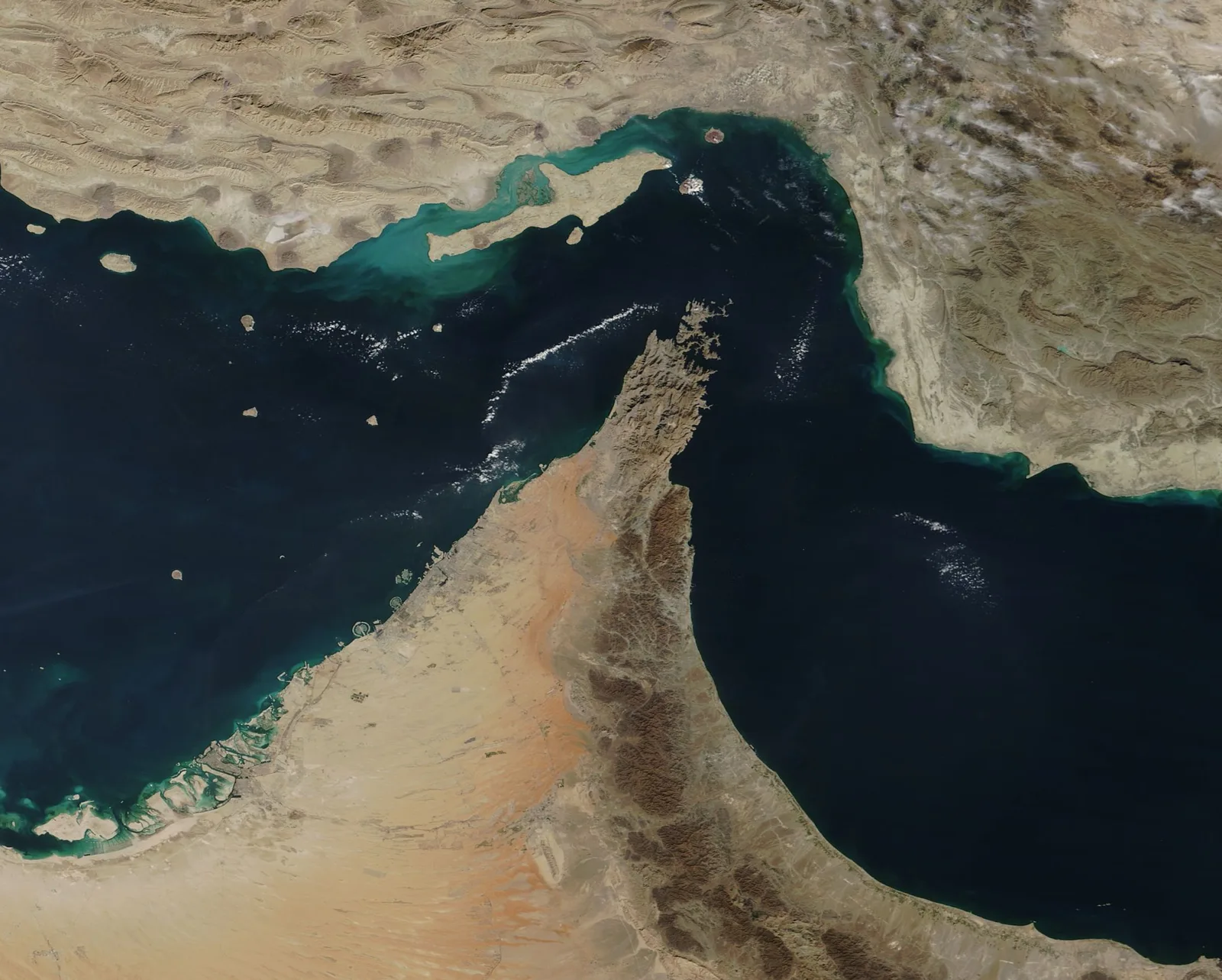 File photo
What happened
Key facts
- Iran’s Revolutionary Guard claimed that a supertanker carrying more than 2 million barrels of oil and two other fuel ships exploded after striking mines in the Strait of Hormuz.
- The claims about the damaged tankers could not be verified.
- The US said it had cleared all internationally recognized primary transit routes in the strait.
- Iran's Islamic Revolutionary Guards Corps said three oil tankers caught fire after striking mines while using what it called an unauthorised southern route through the Strait of Hormuz.
- Iran's army later reported that another tanker caught fire east of the strait after striking mines in a restricted area.
- The IRGC said the first three vessels had switched off their radar and navigation systems and ignored warnings from its navy.
- UKMTO reported a vessel on fire about 25 nautical miles northeast of Khasab, Oman; it later said the fire was extinguished and the crew were safe.
- UKMTO said a small boat attached two explosive devices to the vessel's hull, and the blasts caused an engine-room fire that temporarily disabled it.
The brief
Iran’s Revolutionary Guards said three oil tankers caught fire after striking mines in the Strait of Hormuz, but the New York Post reported that the claims about the damaged vessels could not be verified. The Guards characterized the route as an unauthorised southern passage.
The Straits Times, news.az, mbiz.heraldcorp.com, A News and Forex Factory also reported the Guards’ account of three tankers catching fire or hitting mines. The IRGC said the vessels had disabled their radar and navigation systems and disregarded warnings from its navy.
Those details are the Guards’ account; the New York Post separately emphasized that the tanker-damage claims remained unverified. The New York Post identified one of the vessels as a supertanker carrying more than 2 million barrels of oil. CNA’s account also reported the Guards’ claim that three oil tankers struck mines, while describing them as “violating” vessels.
Iran’s army reported a separate tanker fire east of the strait, saying the vessel had struck mines in a restricted area. That report concerns an additional ship, distinct from the three vessels cited by the IRGC. CNA reported the army’s account; the other accounts summarized here focus on the Guards’ claim about three tankers.
UKMTO reported a fire aboard a vessel about 25 nautical miles northeast of Khasab, Oman. The agency later said the fire had been extinguished and the crew were safe. UKMTO attributed that incident to two explosive devices that a small boat attached to the vessel’s hull; the blasts caused an engine-room fire and temporarily disabled the ship.
The report does not identify that vessel as one of the tankers in Iran’s claims. The US military said it cleared key routes through the strait a day before Iran’s reports, according to CNA. The New York Post described the US action as clearing all internationally recognized primary transit routes.
The two accounts differ in the scope of the description, but neither establishes a link between the US operation and the fires reported by Iran.
The reports describe separate accounts with different levels of confirmation: the IRGC and Iran’s army made claims about mine strikes, the New York Post said the tanker claims could not be verified, and UKMTO gave an account of an explosive-device incident and confirmed that the fire was out and the crew safe.
The available reports do not establish whether the UKMTO vessel was among the ships cited by Iran.
Why it matters
- The IRGC’s claim concerns three tankers in the Strait of Hormuz, including a supertanker the New York Post said carried more than 2 million barrels of oil; the claimed damage could affect the vessels and their cargo, but the tanker claims remain unverified.
- UKMTO’s account identifies a specific shipboard harm mechanism: two explosive devices attached to a hull caused an engine-room fire and temporarily disabled the vessel. UKMTO said the crew were safe and the fire was extinguished.
- Iran’s military accounts distinguish the IRGC’s three tankers on an unauthorised southern route from an additional tanker the army said struck mines in a restricted area east of the strait.
- The US military’s reported clearing of key routes and Iran’s mine-strike claims describe activity in the same waterway, but the reports do not establish a causal connection.
What to watch next
- Whether the IRGC provides further verifiable information about the three tankers it says struck mines.
- Whether Iran’s army provides further details about the separate tanker it said struck mines east of the strait.
- Whether UKMTO identifies the vessel involved in the explosive-device incident or reports further information about its status.
- Whether the US military provides further detail on the routes it said it cleared through the Strait of Hormuz.
How it's being covered
Coverage analysisShow details8 source articles · 8 unique outletsOutlet political mix: Mixed· 3 Center · 2 Right · 3 unratedWhere the outlets are based: Asia 50% · Middle East 25% · Other 25%
How outlets' accounts compare
3 framing differences · 3 uncorroborated claims · 4 information gaps- CNA reports the IRGC’s account and separately includes Iran’s army report of another tanker fire; the New York Post centers on the three IRGC-claimed tankers and says those damage claims could not be verified.
- CNA describes the US military as clearing key routes, while the New York Post calls them all internationally recognized primary transit routes.
- The IRGC attributes the three reported tanker fires to mine strikes; the New York Post says the tanker-damage claims could not be verified.
- UKMTO attributes a separate vessel’s engine-room fire to blasts from two explosive devices attached to its hull.
- The IRGC described the vessels as “violating” and the route as unauthorised.
- UKMTO said the fire was extinguished and the crew were safe.
- The reports do not provide independently verified identification of the tankers, their flags, or confirmation that mines caused their reported fires.
- The reports do not give casualty figures for the claimed tanker incidents.
- The New York Post says the claims about the damaged tankers could not be verified.
- The reports do not establish whether the vessel in UKMTO’s account was one of the tankers Iran cited.
Timeline
Developments from this story's sources, dated background we compiled and fact-checked, and our earlier coverage. Each row says which.- In 1953, a CIA- and MI6-backed coup overthrew Prime Minister Mohammad Mosaddegh and restored the Shah’s authority, an episode that later became a central source of Iranian distrust toward US policy.Background · from our historical context
- Iran established the Islamic Revolutionary Guard Corps.Background · compiled and fact-checked by Updat3
- The United States began escorting reflagged Kuwaiti tankers in the Persian Gulf under Operation Earnest Will.Background · compiled and fact-checked by Updat3
- In April 1988, after a US warship struck an Iranian mine, the United States carried out Operation Praying Mantis against Iranian naval targets; the US described the operation as retaliation for the mine strike.Background · from our historical context
- In 2019, several tankers were attacked in the Gulf of Oman.Background · from our historical context
- Iran began exceeding the agreement’s nuclear limits in 2019, saying its steps answered the US withdrawal.Background · from our historical context
- Iran’s Islamic Revolutionary Guard Corps seized the British-flagged tanker Stena Impero in the Strait of Hormuz.Background · compiled and fact-checked by Updat3
- The United States and Israel launched coordinated strikes across Iran.Background · compiled and fact-checked by Updat3
- Iran announced that vessels passing through the Strait of Hormuz would need prior authorization from the IRGC Navy.Background · compiled and fact-checked by Updat3
- The United States and Iran signed a memorandum of understanding concerning freedom of navigation in the Strait of Hormuz; implementation later stalled over security disagreements.Background · compiled and fact-checked by Updat3
- Iran presented a proposal to reopen the Strait of Hormuz after an interim ceasefire collapsed.Background · compiled and fact-checked by Updat3
- Iran says Hormuz reopening offer remains conditional on US concessionsEarlier Updat3 coverage
- Iranian Guard says mines set two tankers ablaze in Strait of HormuzEarlier Updat3 coverage
- CENTCOM says US forces supported 1.5 billion barrels of Gulf oil exports through HormuzEarlier Updat3 coverage
- EU gas prices reach a four-year high as Hormuz LNG shipments stay lowEarlier Updat3 coverage
- On October 28, 2026, the US military said it had cleared key routes through the Strait of Hormuz, a day before Iran’s reports of fires aboard tankers.Background · from our historical context
How we got here
On October 28, 2026, the US military said it had cleared key routes through the Strait of Hormuz, a day before Iran’s reports of fires aboard tankers.
During the 1980–88 Iran-Iraq War, attacks on commercial shipping in the Persian Gulf became known as the “Tanker War.” In April 1988, after a US warship struck an Iranian mine, the United States carried out Operation Praying Mantis against Iranian naval targets; the US described the operation as retaliation for the mine strike.
Original sources
8 articles from 8 outletsEvery story links to the reporting it was built from. How we choose sources
Spotted a factual error, a broken link or a misleading summary? Tell us.