
Iranian Guard says mines set two tankers ablaze in Strait of Hormuz
Iran’s Revolutionary Guard said seven tankers were involved in a Strait of Hormuz incident and blamed mines for fires aboard two, raising concerns about shipping through the vital oil route.
AI-assisted synthesis · Based on 6 outlets' reporting · Article text read from 1 of 6 outletsHow it's made
View timeline · 17 entries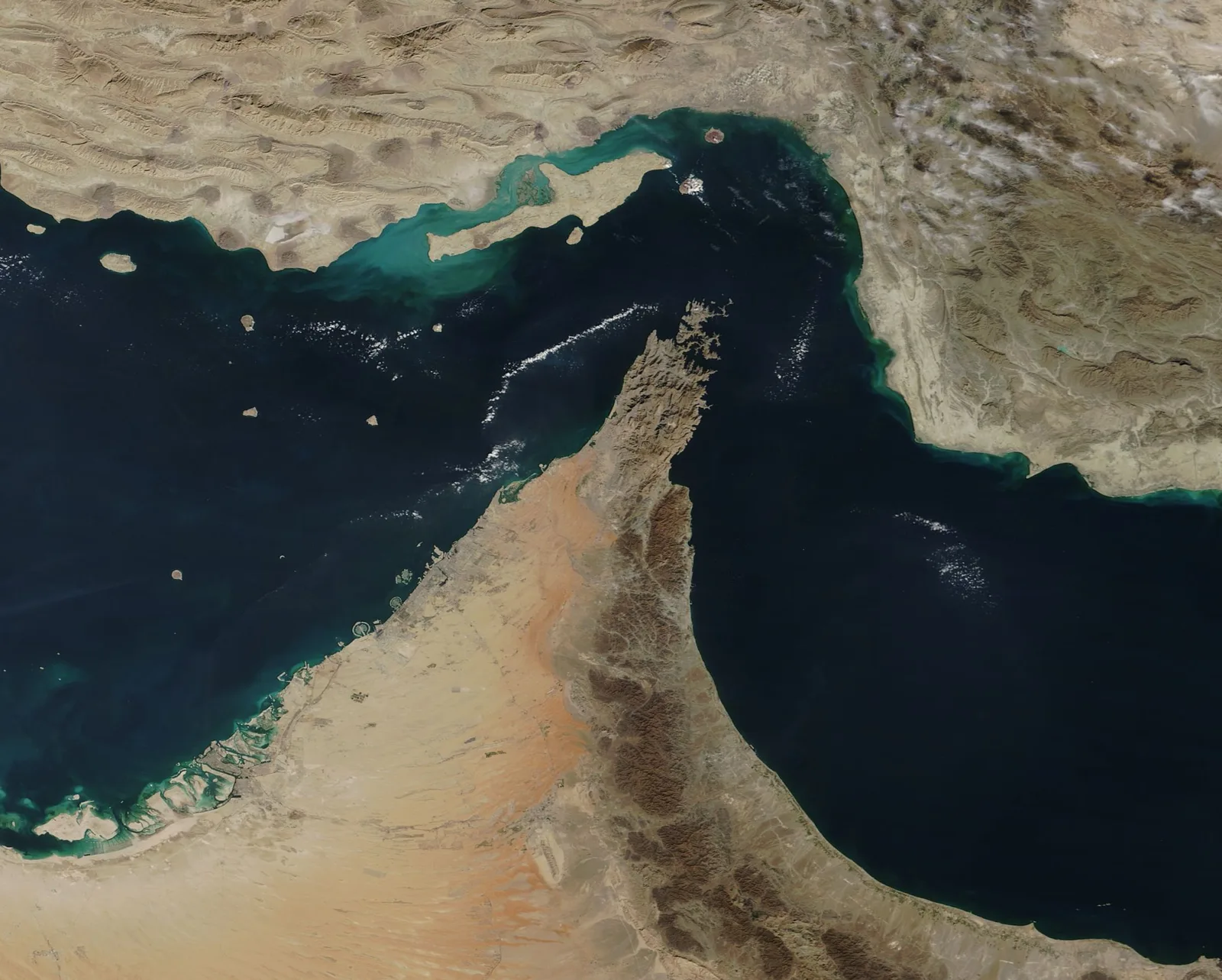 File photo
What happened
Key facts
- Iranian claims described seven oil tankers in the Strait of Hormuz as damaged, on fire, or having caught fire, according to reports by NewsCord, The Washington Times, and The Hindu.
- The reported incident involved the Strait of Hormuz, which connects the Persian Gulf with the Gulf of Oman and the Arabian Sea.
- The Strait of Hormuz lies between Iran to the north and Oman and the United Arab Emirates to the south.
- Commercial vessels use designated traffic-separation lanes in the Strait of Hormuz.
- Roughly one-fifth of the world’s petroleum liquids consumption has passed through the Strait of Hormuz in recent years.
The brief
Iran’s Islamic Revolutionary Guard Corps said two oil tankers caught fire in the Strait of Hormuz after striking naval mines laid by its forces. The account appeared in a statement on Sepah News, which the IRGC identified as its official news outlet.
The claim describes a specific incident involving two vessels, while headlines from other outlets report Iranian claims involving seven tankers; those headlines do not provide further detail about the vessels or events they describe. The IRGC said the tankers had tried to pass through a route south of the waterway.
It characterized that route as “illegal” and said the vessels collided with mines placed by its naval forces. The account attributes both the mine placement and the tanker fires to the IRGC’s stated actions, but the incident details are presented as the corps’ claims. The statement also warned vessels against using the mined path.
The IRGC said attempts to cross it would lead to the burning of what it called the violators’ assets. Its warning did not specify how many vessels might use the route or whether any other ships had been affected. Separately, Iran’s Foreign Ministry spokesperson Esmaeil Baghaei said the country would not let any strike against it go unanswered.
He said Iran would respond with equal or greater force. His statement did not identify a particular strike or connect that warning directly to the tanker incident.
The reported tanker fires and Baghaei’s remarks are separate elements in the account: the IRGC described mines and two burning tankers, while the Foreign Ministry spokesperson stated Iran’s position on strikes against the country. Neither statement, as reported, supplies further details about the tankers’ identities, their operators, or the extent of damage.
Headlines from NewsCord, The Washington Times, AP News, The Hindu and U.S. News & World Report each present the Iranian claim as involving seven tankers. Their wording varies between damage and fire, but the headlines do not explain how the two-tanker account relates to the seven-tanker figure.
The distinct counts therefore remain claims stated in separate forms, not a reconciled total. The IRGC’s account sets out its stated claim about the route, mines and fires, alongside a warning about crossing the mined path.
Baghaei’s remarks set out Iran’s stated position on any strike against it; they do not name a triggering event or describe a specific action beyond that general warning.
Why it matters
- The Strait of Hormuz is a key route for seaborne oil, so a credible mine threat could lead shipowners and insurers to delay or reroute tankers, increasing transport costs and risking slower deliveries to oil-importing countries. The supplied reports do not independently verify the mine claim or establish that shipping flows have been disrupted, so the scale of any impact remains unclear.
What to watch next
- Whether the IRGC issues further details about the two tankers it said caught fire.
- Whether Iranian authorities provide information connecting the two-tanker account with the seven-tanker figure in the headlines.
- Whether the IRGC reports further action against vessels using the route it described as illegal.
How it's being covered
Coverage analysisShow details6 source articles · 6 unique outlets · 5 distinct reportsOutlet political mix: Mostly Center· 4 Center · 1 Right · 1 unratedWhere the outlets are based: US/Canada 50% · Asia 33% · Other 17%
- Coverage is currently concentrated among Center-rated outlets (4 of 5 rated sources); comparatively few Left-rated outlets have published on the event.
One source is from a wire service (AP, Reuters, AFP or Bloomberg), whose reporting other outlets often republish.
How outlets' accounts compare
Timeline
Developments from this story's sources, dated background we compiled and fact-checked, and our earlier coverage. Each row says which.- The danger to shipping became especially clear during the Iran-Iraq War, which began in September 1980.Background · from our historical context
- Iran signed UNCLOS in 1982 but has not ratified it; it has maintained that the convention’s transit-passage provisions do not bind it in the same way as states parties.Background · from our historical context
- The United Nations adopted the Convention on the Law of the Sea, which included rules for passage through international straits.Background · compiled and fact-checked by Updat3
- From 1984, attacks on vessels associated with the opposing side’s oil trade widened into what became known as the Tanker War.Background · from our historical context
- Iran and Iraq began attacking commercial shipping in the Persian Gulf during the Tanker War.Background · compiled and fact-checked by Updat3
- In 1987, Kuwait sought protection for its oil tankers and several were reflagged under the United States.Background · from our historical context
- On July 24, 1987, the reflagged tanker Bridgeton struck a mine while travelling in a U.S.-led convoy in the Gulf.Background · from our historical context
- In April 1988, the U.S. frigate USS Samuel B. Roberts struck a mine in the Gulf and was badly damaged.Background · from our historical context
- The U.S. Navy launched Operation Praying Mantis, striking Iranian naval forces and installations after a U.S. ship hit an Iranian mine.Background · compiled and fact-checked by Updat3
- Iran seized the British-flagged tanker Stena Impero in the Strait of Hormuz on July 19, 2019, after British authorities had detained the Iranian tanker Grace 1 near Gibraltar earlier that month.Background · from our historical context
- Iran announced that vessels passing through the Strait of Hormuz would need prior authorization from the IRGC Navy.Background · compiled and fact-checked by Updat3
- The United States and Iran signed a memorandum of understanding concerning freedom of navigation in the Strait of Hormuz; implementation later stalled over security disagreements.Background · compiled and fact-checked by Updat3
- Iran presented a proposal to reopen the Strait of Hormuz after an interim ceasefire collapsed.Background · compiled and fact-checked by Updat3
- Iran-linked strikes hit six ships in one day near Strait of Hormuz, security data showsEarlier Updat3 coverage
- Iran says Hormuz reopening offer remains conditional on US concessionsEarlier Updat3 coverage
How we got here
The Strait of Hormuz is a narrow passage between Iran to the north and Oman and the United Arab Emirates to the south, connecting the Persian Gulf with the Gulf of Oman and the Arabian Sea. Its geography makes it a critical route for energy exports: in recent years, roughly one-fifth of the world’s petroleum liquids consumption has passed through the strait.
Commercial vessels use designated traffic-separation lanes, and disruption can affect shipping, insurance costs and global energy markets even when the damage is limited to a small number of ships. The legal status of passage through the strait is contested.
Original sources
6 articles from 6 outletsEvery story links to the reporting it was built from. How we choose sources
Spotted a factual error, a broken link or a misleading summary? Tell us.