
Iran increases Strait of Hormuz surveillance as vessel strikes and oil flows plunge, reports say
Iran increased surveillance of the Strait of Hormuz as a tanker and a container ship were struck by projectiles of unknown origin, according to maritime reports. The attacks coincided with a sharp drop in daily oil volumes transiting Hormuz to 2.9 million barrels, according to Kpler and reporting compiled by the outlets.
AI-assisted synthesis · Based on 4 independent reports from 5 outlets · Full text read from 2 of 4 reportsHow it's made
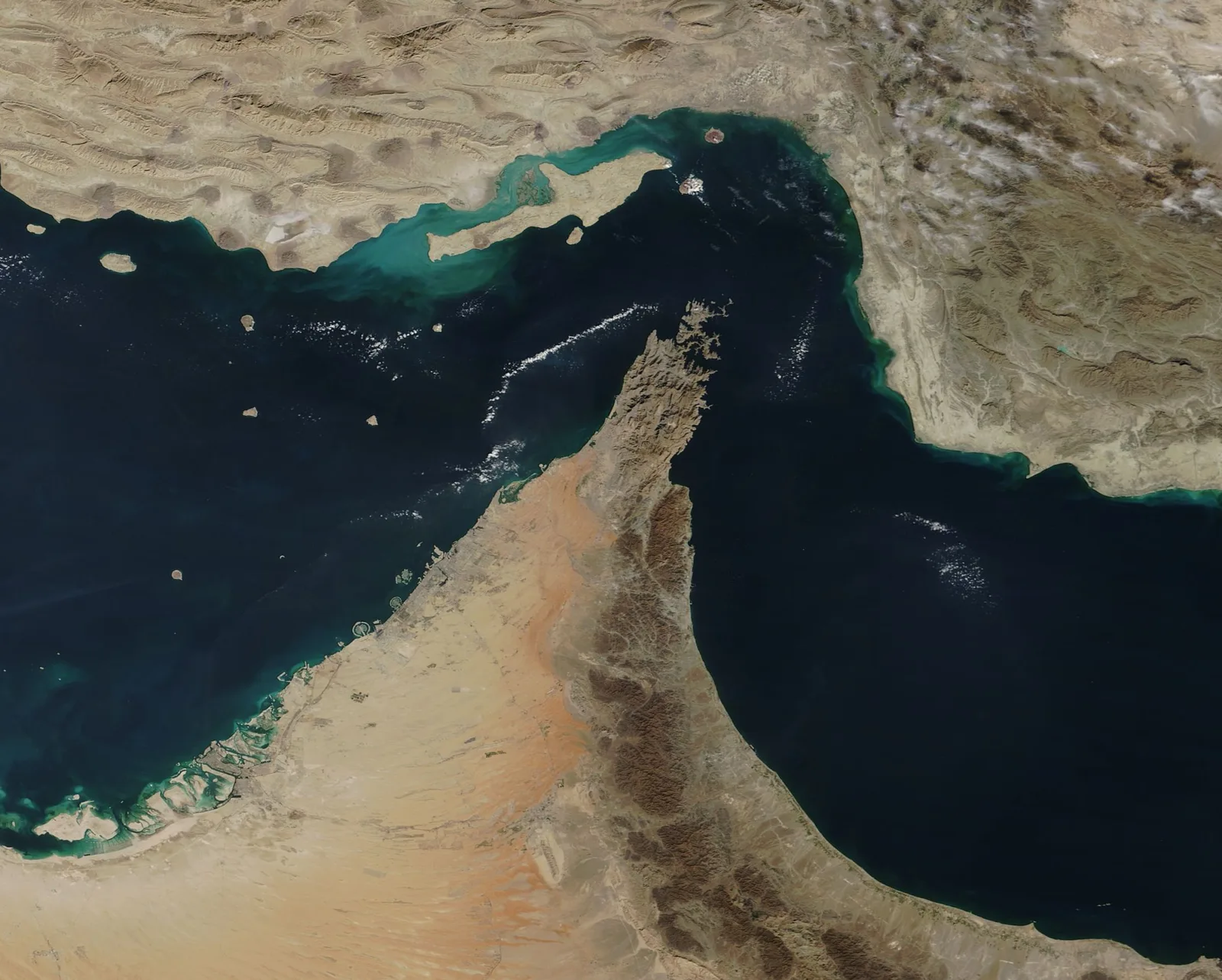 File photo
What happened
Key facts
- A tanker and a container ship were struck by projectiles of unknown origin in the Strait of Hormuz, UK Maritime Trade Operations reported (per iranintl.com, The National).
- At least 12 vessels were attacked in and around the Strait of Hormuz over a recent week, including six strikes reported on one Sunday, according to UK Maritime Trade Operations and the outlets' reporting (per iranintl.com, The National).
- Kpler reported that 2.9 million barrels passed through the Strait of Hormuz on October 11, the lowest daily volume recorded that month (per iranintl.com).
- Iran increased surveillance of the Strait of Hormuz in the period when attacks on commercial shipping rose, according to reporting in the supplied outlets (per iranintl.com, The National, businesstimes.com.sg).
- Iran International wrote that the surge in attacks may be intended to exploit U.S. restraint ahead of the U.S. midterm elections and to undermine a recovery in Persian Gulf oil shipments, citing unnamed experts (per iranintl.com).
- The National reported a drone attack near Oman's Sohar anchorage during the period of intensified strikes (per The National).
- A vessel reported being struck about 95 km north of Madinat Ash Shamal in Qatar, with casualties reported and the fire later extinguished, according to The National (per The National).
- Multiple international outlets published accounts characterising the recent period as one of the most intense phases of attacks on shipping in the Strait since the war began (per iranintl.com, The National).
The brief
Reports from maritime authorities and regional outlets say a tanker and a container ship were hit by projectiles of unknown origin in the Strait of Hormuz during a sharp uptick in attacks on commercial vessels.
UK Maritime Trade Operations flagged the strikes as part of at least a dozen attacks in and around the strait over a recent week, and outlets compiling maritime-security reporting described six strikes on a single Sunday. Iran, meanwhile, stepped up surveillance of the Hormuz approaches in the same period, the outlets reported.
Analysts cited by Iran International suggested the surge in strikes and the surveillance push occurred when U.S. political leaders were exercising public restraint ahead of U.S. elections, a contention the outlet attributed to unnamed experts.
Kpler's vessel-flow data, cited by the outlets, showed just 2.9 million barrels transited the strait on October 11, a marked decline and the lowest daily volume recorded in the month.
The National's coverage added that the wave of attacks affected tankers as well as liquefied natural gas and liquefied petroleum gas carriers, and it described a drone strike near Oman's Sohar anchorage during the same interval.
The National also reported a vessel struck about 95 km north of Madinat Ash Shamal in Qatar; that vessel caught fire, authorities extinguished the blaze, and officials said the 22 crew were safe.
Iran International framed the surge in attacks as possibly intended to hinder a recovery in Persian Gulf oil shipments and to take advantage of U.S. restraint before the midterm vote; that analysis was attributed to experts speaking to the outlet, not to an official Iranian statement.
The outlets' accounts do not name a responsible party for the projectiles that struck the tanker and container ship; UK Maritime Trade Operations characterised the weapon origin as unknown.
Reporting across the pack shows a close temporal link between heightened Iranian surveillance measures in the strait and the cluster of vessel strikes, but the sources do not supply direct evidence that Iran carried out or authorised the projectile strikes.
The compiled coverage underscores both the immediate commercial impact—lower tanker transits and interrupted movements of oil, LNG and LPG—and competing public framings: one outlet emphasises the operational maritime-security picture and crew safety, while another highlights analyst views tying the pattern to U.S. political timing and a strategic aim to suppress Gulf oil flows.
Why it matters
- Owners and crews of commercial tankers and container ships bear direct costs: attacks forced evacuations, extinguishing of a vessel fire, and disrupted shipments of oil, LNG and LPG as documented by maritime authorities and The National.
- Oil traders and importers face concrete supply pressure: Kpler's reported fall to 2.9 million barrels transiting the Strait on October 11 is a measurable reduction in daily Gulf oil flows that can tighten available seaborne supply.
- U.S. political actors and markets have documented incentives: Iran International cited analysts who said the surge coincided with U.S. electoral timing and U.S. public restraint, a linkage that would benefit actors seeking to influence U.S. policy windows if proven but is presented by the outlet as analysts' interpretation, not as established fact.
What to watch next
- Whether UK Maritime Trade Operations reports further vessel strikes in the Strait of Hormuz and whether those reports identify the origin of projectiles.
- Whether Kpler records a rebound or further decline in daily barrels transiting the Strait of Hormuz compared with the 2.9 million barrels figure reported for October 11.
- Whether regional authorities or naval coalitions release investigations attributing responsibility for the projectile strikes on the tanker and container ship.
How it's being covered
Coverage analysisShow details5 source articles · 5 unique outlets · 4 distinct reportsCoverage mix: Mostly Center· 3 Center · 1 RightWhere the outlets are based: Middle East 60% · US/Canada 20% · Other 20%
- Coverage is currently concentrated among Center-rated outlets (3 of 4 rated sources); comparatively few Left-rated outlets have published on the event.
How outlets' accounts compare
3 framing differences · 3 uncorroborated claims · 5 information gaps- Iran International frames the surge in attacks as potentially timed to exploit U.S. electoral restraint and to hinder a recovery in Persian Gulf oil shipments, attributing that view to unnamed experts; The National focuses on operational maritime-security details including crew evacuations and a drone strike near Sohar.
- iranintl.com and Kpler (cited in iranintl.com) report 2.9 million barrels transited Hormuz on October 11; no other numeric daily-flow figures for the same date are provided by the other sources.
- Iran International's analysts link the surge in attacks to U.S. restraint ahead of U.S. elections, while other outlets do not present that causal link as established; the sources disagree on whether the timing implies intent or is merely coincident.
- UK Maritime Trade Operations attributes the incidents to projectiles of unknown origin; Iran International's experts attribute strategic intent to unnamed actors but do not name who carried out the strikes.
- Iran International quoted an analyst saying 'He said he wouldn't attack until the election' to characterise an actor's restraint, attributing that phrasing to the cited expert commentary.
- Kpler's figure that 'Just 2.9 million barrels passed through Hormuz on October 11' is repeatedly cited as evidence of a sharp drop in flows.
- No source details any specific prior strike or action that directly triggered the reported projectile hits on the tanker and container ship.
- No source provides comprehensive casualty tallies across all attacks in the week beyond the single vessel for which The National reported crew safety and a 'casualties reported' phrase without numeric detail.
- No source cites any multilateral legal or investigatory body (ICC, ICJ or UN) undertaking an inquiry into the vessel strikes in this reporting set.
- No source documents the ownership, insurance or contractual arrangements of the struck vessels that would show which commercial parties bear financial losses.
- No report Updat3 read assigns definitive responsibility for the projectile strikes that hit the tanker and container ship; UK Maritime Trade Operations described the projectiles as of unknown origin.
How we got here
Iran publicly said it increased surveillance in the Strait of Hormuz as commercial-shipping incidents intensified (reported by Iran International and The National).
The legal and operational framework governing international navigation in the strait rests on the United Nations Convention on the Law of the Sea (UNCLOS), which entered into force on November 16, 1994, and on longstanding Royal Navy and coalition maritime security patrol practices dating to the 1980s (UN treaty record; naval operational histories).
Original sources
5 articles from 5 outletsEvery story links to the reporting it was built from. How we choose sources
Spotted a factual error, a broken link or a misleading summary? Tell us.