
Rubio says US and India are close to a trade deal, with few issues left
Marco Rubio said in Mumbai that the United States and India were close to completing a trade agreement, with only a few issues remaining. He said an announcement could come soon, while India’s commerce minister had said the deal’s first tranche was in its final stages of legal drafting.
AI-assisted synthesis · Based on 6 outlets' reporting · Article text read from 1 of 6 outletsHow it's made
View timeline · 7 entries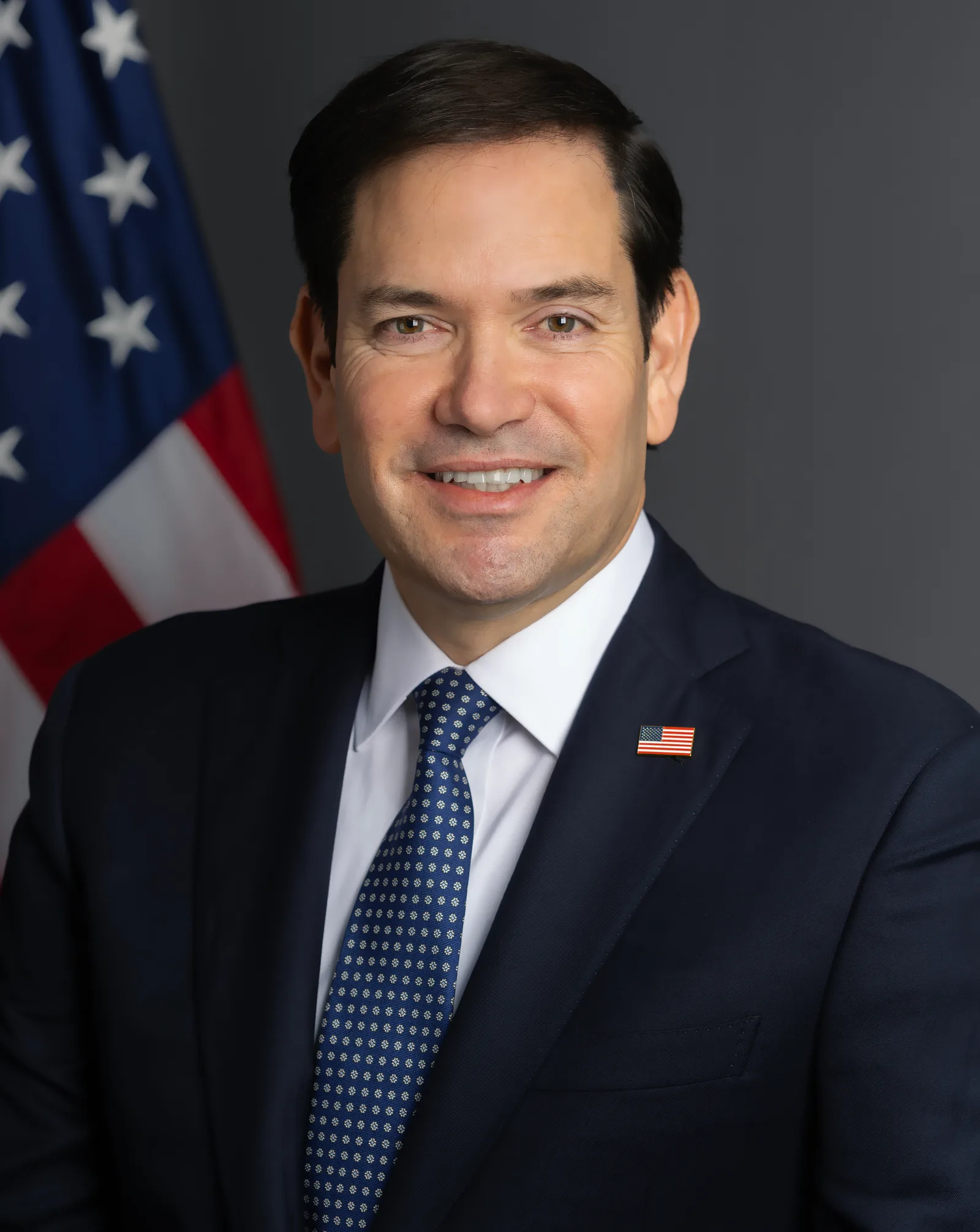 File photo
What happened
Key facts
- Marco Rubio said the United States and India were close to a trade agreement (per swarajyamag.com, europesun.com, fortune.com).
- Rubio said a small number of items remained to be resolved (per swarajyamag.com, Hindustan Times).
- Rubio said an announcement could happen shortly (per swarajyamag.com, europesun.com).
- Piyush Goyal said the previous week that the first tranche of the trade agreement was in its final stages and undergoing legal drafting (per swarajyamag.com).
The brief
Marco Rubio said the United States and India are close to completing a trade agreement, telling reporters in Mumbai that only a small number of issues remain. Swarajya reported that Rubio said an announcement could happen shortly. His remarks put the negotiations near a decision point, although the account describes the agreement as unfinished.
Rubio spoke during his second official visit to India. The statement identified Mumbai as the location of his remarks, and the Daily News headline also says Rubio and Jaishankar held talks there as the two countries sought to finalize a trade deal. The headline does not provide details of those talks.
Hindustan Times characterized Rubio’s assessment as “Very, very close” and said some items remained, while Fortune’s headline echoed his statement that the countries were close to a deal. India’s Commerce Minister Piyush Goyal said the previous week that the first tranche of the agreement was in its final stages and undergoing legal drafting.
That account offers a separate indication of the work’s status, but it does not say that the drafting had concluded or that the agreement had been signed. Rubio’s own account, as reported by Swarajya, leaves a small number of items to resolve. The negotiations follow changes in U.S. tariffs on Indian goods.
Swarajya reported that Washington imposed tariffs of up to 50 per cent on most Indian goods in August 2025, after trade talks broke down. A framework agreed in February reduced the tariff rate to 18 per cent. Negotiations subsequently stalled, then regained momentum in recent weeks, according to the outlet.
Swarajya put bilateral trade between the countries at around $149.4 billion last year. It also described the relationship as a comprehensive global strategic partnership. The outlet reported that India has sought tariff rates comparable to those applied to manufacturing competitors such as Vietnam; it did not state whether the remaining issues concern that request.
The next concrete steps identified in the account are resolving the outstanding items and completing the first tranche’s legal drafting. Rubio said an announcement could come shortly, but neither his remark nor Goyal’s account confirms that an agreement has been executed.
The reported sequence is therefore a near-complete negotiation, a remaining set of issues, and legal work on the first tranche—not a concluded deal.
Why it matters
- The tariff mechanism directly affects Indian goods: Washington imposed rates of up to 50 per cent on most of them, and a February framework reduced the rate to 18 per cent.
- India has sought tariff rates comparable to those applied to manufacturing competitors such as Vietnam, according to Swarajya.
- The reported economic relationship is substantial: bilateral trade totalled around $149.4 billion last year, according to Swarajya.
What to watch next
- Whether Rubio’s reported prospect of an announcement shortly is followed by an announcement.
- Whether the remaining items Rubio identified are resolved.
- Whether the first tranche completes the legal drafting that Piyush Goyal said was underway.
How it's being covered
Coverage analysisShow details6 source articles · 6 unique outletsOutlet political mix: Mostly Center· 3 Center · 1 Right · 2 unratedWhere the outlets are based: Unknown 50% · Asia 33% · Other 17%
- Coverage is currently concentrated among Center-rated outlets (3 of 4 rated sources); comparatively few Left-rated outlets have published on the event.
How outlets' accounts compare
Timeline
Developments from this story's sources, dated background we compiled and fact-checked, and our earlier coverage. Each row says which.- The United States and India signed a bilateral trade agreement in 1979, providing an earlier formal foundation for commerce between the countries.Background · from our historical context
- The United States and India established the Trade Policy Forum.Background · compiled and fact-checked by Updat3
- On June 5, 2019, the United States ended India’s preferential access to the Generalized System of Preferences, citing India’s failure to provide equitable and reasonable market access.Background · from our historical context
- The United States and India relaunched the Trade Policy Forum after a four-year gap.Background · compiled and fact-checked by Updat3
- The United States and India agreed to remove retaliatory tariffs and settle six disputes at the World Trade Organization.Background · compiled and fact-checked by Updat3
- The United States and India launched trade-agreement negotiations and set a goal of completing a first tranche by fall.Background · compiled and fact-checked by Updat3
- India's commerce minister Piyush Goyal said the first tranche of a U.S.–India trade agreement was in final-stage legal drafting.Background · compiled and fact-checked by Updat3
How we got here
The immediate backdrop came the previous week, when Indian Commerce Minister Piyush Goyal said the first tranche of a U.S.–India trade agreement was in its final stages and undergoing legal drafting. The two countries established a Trade Policy Forum in 2005 to address trade issues through regular government discussions; it was relaunched in November 2021 after a four-year gap.
On June 5, 2019, the United States ended India’s preferential access to the Generalized System of Preferences, citing India’s failure to provide equitable and reasonable market access. The United States and India signed a bilateral trade agreement in 1979, providing an earlier formal foundation for commerce between the countries.
Original sources
1 of 6 articles · US/Canada · Show allEvery story links to the reporting it was built from. How we choose sources
Spotted a factual error, a broken link or a misleading summary? Tell us.