
Israel exit polls put Netanyahu bloc short of a majority
Exit polls from three Israeli broadcasters projected Prime Minister Benjamin Netanyahu’s bloc at about 50 seats, while Gadi Eisenkot’s opposition bloc was projected at 52 to 53. Neither bloc was projected to reach the 61 seats needed for a Knesset majority, and vote counting began after polling stations closed.
AI-assisted synthesis · Based on 8 outlets' reporting · Article text read from 2 of 8 outletsHow it's made
View timeline · 12 entries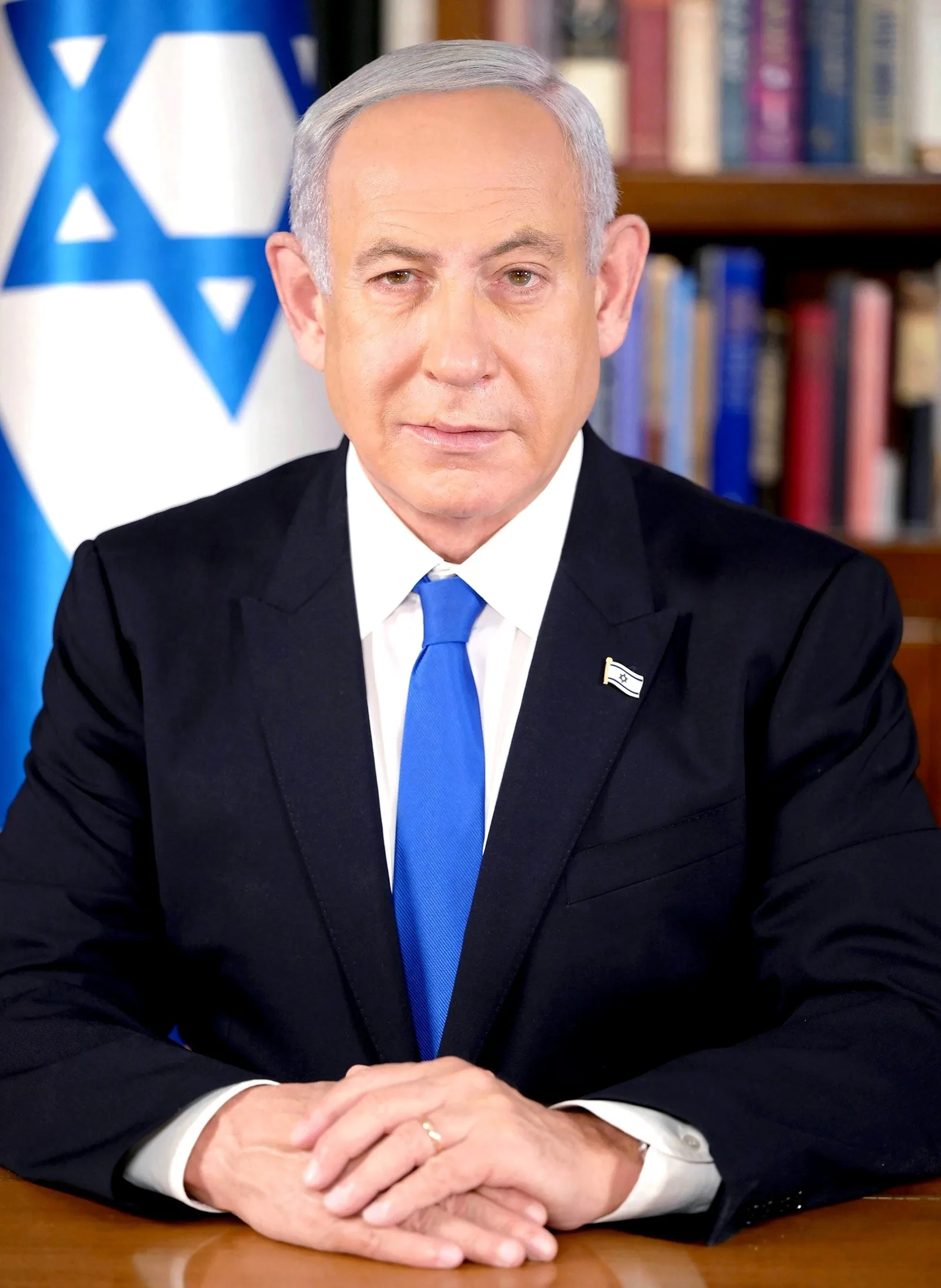 File photo
What happened
Key facts
- With 48.4% of votes counted, Netanyahu’s bloc was projected to win 55 seats, Eisenkot’s 50 and Arab parties’ 15, according to Israeli media.
- Neither bloc reached the 61 seats needed for a majority in the 120-seat Knesset.
- Israel’s Central Elections Committee was counting votes, and definitive results were expected after further counting.
- Netanyahu called for a “strong, right-wing national government” at Likud election headquarters in Jerusalem.
- Netanyahu said Israel had an opportunity, alongside President Trump, to remove what he called the existential threat of Iran.
- Eisenkot, leader of Yashar and a former military chief, said voters had rejected Netanyahu and had all but ruled out forming a government with Arab parties.
- A deadlock could leave Netanyahu as caretaker prime minister during coalition negotiations or until another election.
- The coalition’s projected total is below the 61 seats required for a Knesset majority.
The brief
Exit polls from three major Israeli broadcasters projected Prime Minister Benjamin Netanyahu’s bloc at about 50 seats and the opposition grouping led by Gadi Eisenkot at 52 to 53, leaving neither side at the 61 seats required for a Knesset majority.
The projections pointed to a fragmented parliament rather than a clear governing majority, with the final result dependent on the count. The Central Election Committee announced that polling stations had closed and counting was beginning. The election was for the 26th Knesset.
Early on October 28, official counts were still being tallied; the exit-poll figures were estimates, not certified results. The projected distribution gave Arab parties 17 to 18 seats. According to Turkiye Today’s account, the opposition would need their support to reach a majority.
That makes the Arab parties’ eventual seat totals and the positions of potential coalition partners consequential to any effort to assemble a government; the sources do not establish whether those parties would support Eisenkot.
Eisenkot said that, if the projections proved accurate, he would work to replace Netanyahu’s government and establish what he called a “Zionist mobilization government.” His statement was conditional on the polls holding, and did not itself amount to a parliamentary agreement or an established coalition.
The projected opposition bloc was described as including Eisenkot’s Yashar party, Bennett’s B’Yachad, Yisrael Beiteinu and the Democrats. A separate account characterized the contest as a deadlock, while the Times of Israel and BBC headlines emphasized uncertainty over a replacement government and the opposition bloc’s narrow projected lead.
TRT World and RNZ likewise framed the outcome as leaving neither bloc on course for a majority. Netanyahu’s projected bloc was estimated at about 50 seats, down from 64 in 2022. The projections therefore indicated a substantial decline for his bloc compared with that earlier election, but they did not determine which parties would ultimately form a government.
Yair Lapid called the projections a defeat for Netanyahu’s bloc. The reported positions and estimates describe election-night reactions and preliminary projections; the official count, rather than those assessments, would determine the seat allocation.
Why it matters
- The 61-seat threshold is the concrete barrier facing both blocs: projections put Netanyahu’s at about 50 and Eisenkot’s at 52 to 53.
- Arab parties were projected to hold 17 to 18 seats, making their support a possible mechanism for the opposition to reach a majority.
- Eisenkot said he would seek to replace Netanyahu’s government if the projections held, while the projected seat count and eventual coalition decisions determine whether that goal is attainable.
- Netanyahu’s bloc was projected at about 50 seats, compared with 64 in 2022, indicating a marked change in its projected parliamentary strength.
What to watch next
- Whether the Central Election Committee’s count confirms or changes the broadcasters’ projections.
- Whether Arab parties’ final seat totals fall within the projected 17 to 18 seats.
- Whether Eisenkot pursues his stated plan to replace Netanyahu’s government if the exit-poll pattern holds.
- Whether the parties projected in Eisenkot’s bloc—Yashar, B’Yachad, Yisrael Beiteinu and the Democrats—can assemble a governing majority.
How it's being covered
Coverage analysisShow details8 source articles · 8 unique outletsOutlet political mix: Center Only· 5 Center · 3 unratedWhere the outlets are based: Asia 50% · Middle East 38% · Other 12%
- Coverage is currently concentrated among Center-rated outlets (5 of 5 rated sources); comparatively few Left or Right-rated outlets have published on the event.
How outlets' accounts compare
2 framing differences · 2 uncorroborated claims · 2 information gaps- The Times of Israel headline emphasized rejection of Netanyahu’s current coalition alongside uncertainty about its replacement; the BBC headline highlighted Eisenkot’s bloc being just ahead, while TRT World and RNZ stressed that neither bloc had a path to a majority.
- Eisenkot’s plan to replace Netanyahu’s government is his stated intention, conditional on the projections holding.
- Eisenkot said he would seek to establish a “Zionist mobilization government” if the projections proved accurate.
- Yair Lapid characterized the projections as a defeat for Netanyahu’s bloc.
- The sources do not provide final seat totals or identify a concluded coalition agreement.
- The exit-poll seat estimates were preliminary; the official count was still underway.
Timeline
Developments from this story's sources, dated background we compiled and fact-checked, and our earlier coverage. Each row says which.- Israel held its first Knesset election, using proportional representation to allocate seats among party lists.Background · compiled and fact-checked by Updat3
- Israel held a Knesset election in which Likud won the most seats but Benjamin Netanyahu did not assemble a majority.Background · compiled and fact-checked by Updat3
- Benny Gantz, Gideon Sa'ar and Gadi Eisenkot formed the National Unity alliance.Background · compiled and fact-checked by Updat3
- Israel’s previous general election, held on November 1, 2022, returned Benjamin Netanyahu’s Likud as the largest party and gave the bloc supporting him 64 of the Knesset’s 120 seats.Background · from our historical context
- Netanyahu formed a government on December 29, 2022, with ultra-Orthodox and religious-nationalist parties.Background · from our historical context
- Benjamin Netanyahu’s new government was sworn in after the 2022 election.Background · compiled and fact-checked by Updat3
- Benjamin Netanyahu’s government proposed changes to Israel’s judicial system.Background · compiled and fact-checked by Updat3
- The proposals prompted large demonstrations and opposition from legal officials and reservists; in July 2023, the Knesset passed a law limiting courts’ use of the “reasonableness” standard to review government decisions.Background · from our historical context
- The coalition’s term was also shaped by the war that began after Hamas-led fighters attacked Israel on October 7, 2023, killing about 1,200 people and taking about 250 hostages, according to Israeli figures.Background · from our historical context
- Israel’s Supreme Court struck down that amendment on January 1, 2024, in a landmark ruling on the limits of the government’s power to alter Basic Laws.Background · from our historical context
- Benny Gantz and Gadi Eisenkot left Israel’s emergency government.Background · compiled and fact-checked by Updat3
- ScheduledOfficial counts were still coming in early October 28, and the exit polls were indicators rather than final results.
How we got here
Israel’s previous general election, held on November 1, 2022, returned Benjamin Netanyahu’s Likud as the largest party and gave the bloc supporting him 64 of the Knesset’s 120 seats. Netanyahu formed a government on December 29, 2022, with ultra-Orthodox and religious-nationalist parties.
That government followed the June 2021 formation of a coalition led by Naftali Bennett and Yair Lapid, which ended Netanyahu’s continuous premiership but lasted only until June 2022. The sequence of elections and coalition changes made the ability to assemble a 61-seat majority central to Israeli government formation.
Original sources
1 of 8 articles · Europe · Show allEvery story links to the reporting it was built from. How we choose sources
Spotted a factual error, a broken link or a misleading summary? Tell us.