
Putin backs renewed Ukraine talks after Witkoff meeting, Kremlin says
Vladimir Putin agreed in principle to resume trilateral negotiations with Washington and Kyiv after November 10, Kremlin adviser Yuri Ushakov said after Putin met Steve Witkoff in St Petersburg. Ushakov said the talks would address postwar security for Russia and Ukraine, while the two countries remain far apart on settlement terms.
AI-assisted synthesis · Based on 3 independent reports from 6 outlets · Article text read from 1 of 3 reports · 1 article captured only in partHow it's made
View timeline · 11 entries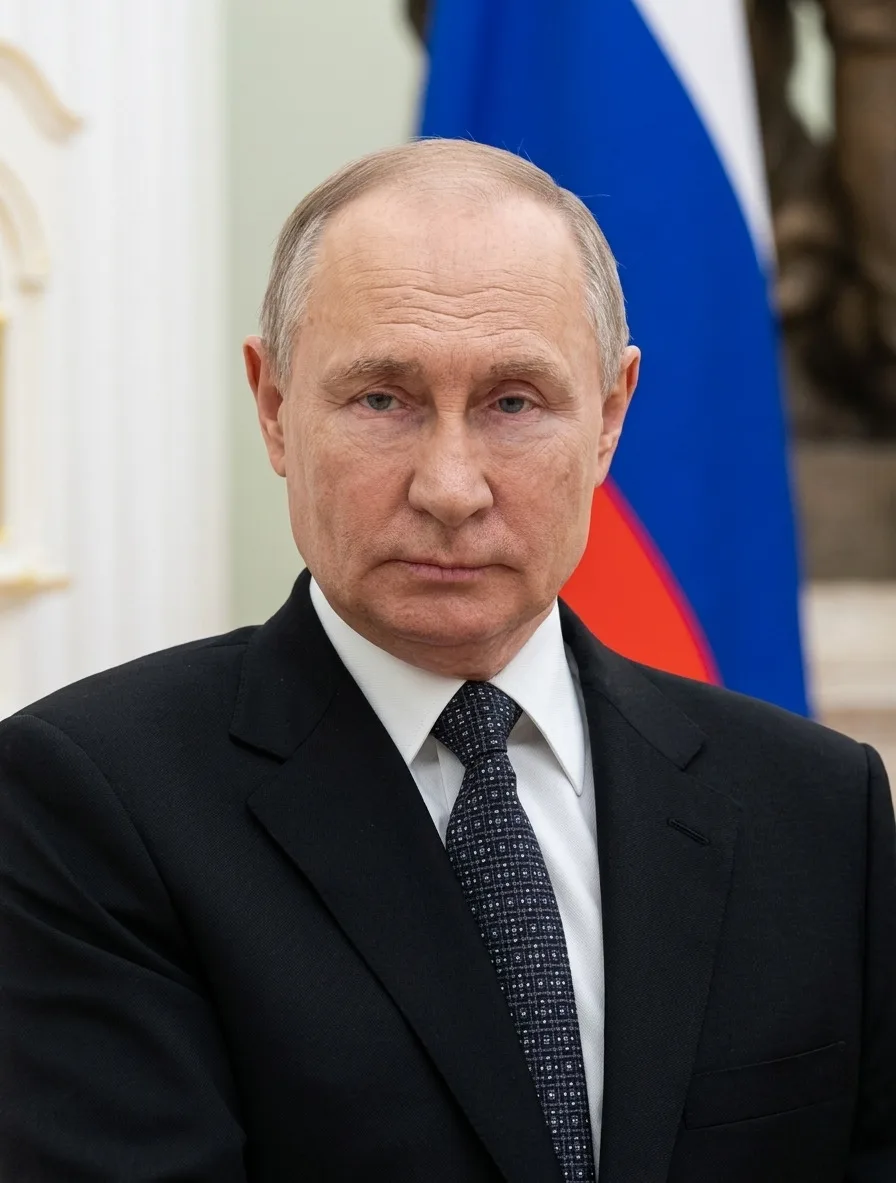 File photo
What happened
Key facts
- Vladimir Putin agreed to resume talks on the Ukraine war involving Kyiv and Washington, according to the Kremlin (per hertsad.co.uk, record-eagle.com, thecomet.net).
- Yuri Ushakov said Putin agreed in principle to resume trilateral negotiations after November 10 (per hertsad.co.uk).
- Ushakov said the talks would focus on a security system for Russia and Ukraine after the conflict ends (per hertsad.co.uk).
- Putin and Steve Witkoff met at Constantine Palace in St Petersburg, and the Kremlin said their discussion lasted about three hours (per hertsad.co.uk).
- Witkoff’s meeting with Putin followed his talks with Volodymyr Zelensky and European leaders in Oslo (per hertsad.co.uk).
- Alexander Stubb said the Oslo meeting made “genuine progress,” while Volodymyr Zelensky said freezing the conflict was the minimum Russia needed to do to end the war (per hertsad.co.uk).
- Russia and Ukraine remained far apart on settlement terms and continued long-range strikes (per hertsad.co.uk).
- Donald Trump said on October 11 that Russia and Ukraine had agreed to stop attacks on energy infrastructure, but the article says Russia continued striking Ukraine’s power grid and Kyiv hit Russian oil refineries (per hertsad.co.uk).
The brief
Vladimir Putin agreed in principle to resume trilateral negotiations with Washington and Kyiv after November 10, Kremlin foreign affairs adviser Yuri Ushakov said after Putin met U.S. envoy Steve Witkoff in St Petersburg. The proposed talks would address how Russia and Ukraine might arrange security after the conflict ends. Headlines from Record-Eagle, The Comet, twaslnews1.twaslnews.com and couriernews.com also report the Kremlin’s statement that Putin agreed to resume talks involving Kyiv and Washington. The Kremlin said Putin and Witkoff spoke for about three hours at Constantine Palace. Ushakov’s account presented the agreement as preliminary: Putin had agreed “in principle,” with negotiations expected after November 10. The account did not describe a completed agreement on a settlement or set out terms for the proposed talks. The meeting followed Witkoff’s discussions in Oslo with Ukrainian President Volodymyr Zelensky and European leaders. Finnish President Alexander Stubb, who attended those talks, said on Tuesday that they had made “genuine progress.” Before meeting Putin, Witkoff described the Oslo discussions as “productive” and said there was “some degree of momentum.”
Zelensky said freezing the conflict was the minimum Russia needed to do to end the war. The article says Russia and Ukraine remain far apart on settlement terms, even as officials discuss renewed negotiations. It also reports that both countries continued long-range strikes. The article sets out competing actions involving energy infrastructure. U.S. President Donald Trump said on October 11 that Russia and Ukraine had agreed to a ceasefire in attacks on energy infrastructure. The article says Russia continued striking Ukraine’s power grid and Kyiv hit Russian oil refineries. It does not describe the terms or implementation of the agreement Trump announced. The Russian Defence Ministry reported on Wednesday that Russian air defences intercepted 373 Ukrainian drones overnight across multiple Russian regions, Crimea and the Black Sea. The article describes the ministry’s figure as its report; it does not provide independent confirmation. The Kremlin’s account of Putin’s agreement therefore arrives alongside continued strikes and markedly different positions on what would be needed to end the war.
Why it matters
- The proposed negotiations concern postwar security arrangements for Russia and Ukraine, according to Ushakov.
- Ukraine’s power grid is a stated target of continuing Russian strikes, while Kyiv has hit Russian oil refineries, according to the article.
- The article says Russia and Ukraine remain far apart on settlement terms, despite the Kremlin’s account that Putin agreed in principle to resume talks.
- The Russian Defence Ministry reported intercepting 373 Ukrainian drones overnight; the article does not independently verify that figure.
What to watch next
- Whether Putin and the Kremlin proceed with trilateral negotiations after November 10, as Ushakov said Putin agreed in principle.
- Whether Washington, Kyiv and Moscow define a security system for Russia and Ukraine after the conflict ends.
- Whether Russia and Ukraine change their positions on settlement terms, given the article’s account that they remain far apart.
- Whether the energy-infrastructure ceasefire Trump said the countries agreed to is implemented, amid reported Russian strikes on Ukraine’s power grid and Kyiv’s attacks on Russian oil refineries.
How it's being covered
Coverage analysisShow details6 source articles · 6 unique outlets · 3 distinct reportsOutlet political mix: Center Only· 4 Center · 2 unratedWhere the outlets are based: Europe 33% · Unknown 33% · Other 34%
- Coverage is currently concentrated among Center-rated outlets (4 of 4 rated sources); comparatively few Left or Right-rated outlets have published on the event.
How outlets' accounts compare
Timeline
Developments from this story's sources, dated background we compiled and fact-checked, and our earlier coverage. Each row says which.- The framework for Ukraine’s security ties includes the Budapest Memorandum, signed on December 5, 1994, by Ukraine, Russia, the United States and the United Kingdom.Background · from our historical context
- NATO’s Bucharest Summit declaration said Ukraine and Georgia would become members of the alliance.Background · compiled and fact-checked by Updat3
- Armed conflict began in the Donbas in 2014 between Ukrainian forces and Russia-backed separatists.Background · from our historical context
- Vladimir Putin signed a treaty with Crimean leaders to incorporate Crimea into Russia; Ukraine rejected the annexation.Background · compiled and fact-checked by Updat3
- The February 2015 Minsk II agreement set out a ceasefire and political steps, but its provisions were not fully implemented; Russia and Ukraine later disputed responsibility for that failure.Background · from our historical context
- On February 24, 2022, Russia launched its full-scale invasion of Ukraine.Background · from our historical context
- The last major direct Russia–Ukraine negotiating round before the full-scale war’s later diplomatic efforts took place in Istanbul on March 29, 2022.Background · from our historical context
- Volodymyr Zelensky presented Ukraine’s ten-point peace formula.Background · compiled and fact-checked by Updat3
- Participants at the Summit on Peace in Ukraine backed a communiqué on nuclear safety, food security and the return of prisoners and deported children.Background · compiled and fact-checked by Updat3
- Donald Trump and Vladimir Putin discussed a proposed pause in attacks on energy infrastructure, and the White House said Putin had agreed to it.Background · compiled and fact-checked by Updat3
- President Donald Trump announced an immediate energy ceasefire between Russia and Ukraine.Background · compiled and fact-checked by Updat3
How we got here
The last major direct Russia–Ukraine negotiating round before the full-scale war’s later diplomatic efforts took place in Istanbul on March 29, 2022. Ukrainian and Russian officials discussed Ukrainian neutrality and security guarantees, but no agreement was signed; the talks ended without a settlement.
At the June 15–16, 2024, Summit on Peace in Ukraine in Switzerland, participating states backed a communiqué focused on nuclear safety, food security and the return of prisoners and deported children, rather than a negotiated end to the war.
Original sources
2 of 6 articles · Europe · Show allEvery story links to the reporting it was built from. How we choose sources
Spotted a factual error, a broken link or a misleading summary? Tell us.