
Iran says Hormuz reopening offer remains conditional on US concessions
Iranian Foreign Minister Abbas Araqchi said Iran’s proposal to reopen the Strait of Hormuz within seven days remains available if the United States accepts Iran’s conditions. He said Iran is reviewing Washington’s reply, while Iran’s security chief said negotiations had stalled over the conditions.
AI-assisted synthesis · Based on 6 independent reports from 7 outlets · Article text read from 2 of 6 reportsHow it's made
View timeline · 13 entries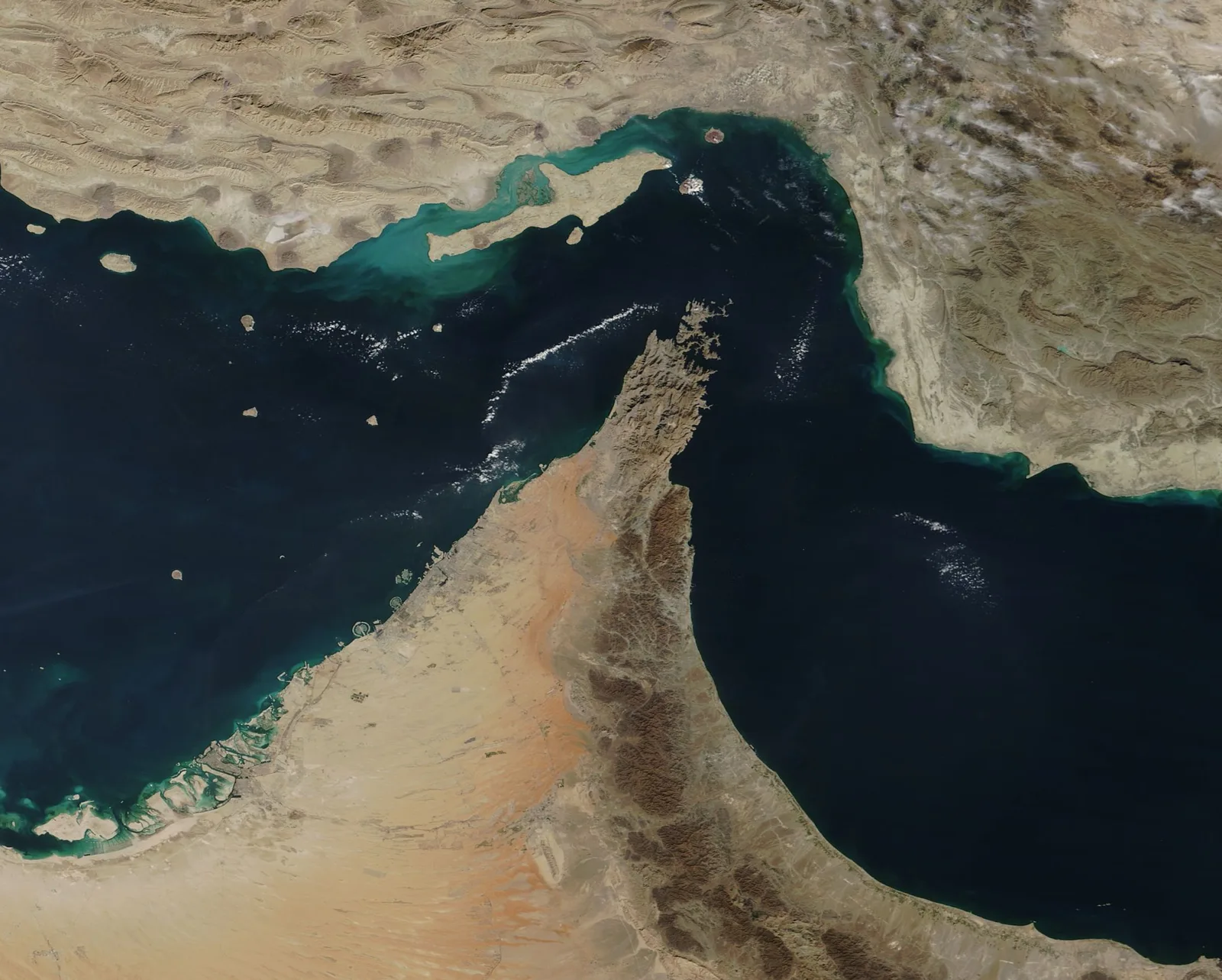 File photo
What happened
Key facts
- On October 18, 2026, Abbas Araqchi said Iran’s offer to reopen the Strait of Hormuz within seven days was still on the table.
- Iran presented the proposal in mid-September after an interim ceasefire collapsed.
- Iran’s security chief said negotiations had stalled because Washington had not addressed all seven conditions for reopening the strait.
- Abbas Araqchi said Iran’s proposal to reopen the Strait of Hormuz remains on the table.
- Araqchi said the strait could reopen within six days of the United States accepting Iran’s conditions; the proposal is also described as a seven-day plan.
- Iran’s stated conditions include lifting the US blockade on Iranian ports, removing US sanctions on Iranian oil exports and ending hostilities across regional fronts.
- The article says Iran submitted the proposal in mid-September after an interim ceasefire collapsed.
- Iran said it had received a US response and was reviewing it.
The brief
Iranian Foreign Minister Abbas Araqchi said Iran’s offer to reopen the Strait of Hormuz within seven days remains available, while making the proposal conditional on US concessions. He said Iran is reviewing Washington’s reply. Iran’s security chief said negotiations had stalled because Washington had not addressed all seven conditions Iran set for reopening the waterway.
The proposal was presented in mid-September, after an interim ceasefire collapsed, according to both accounts. The Times of India reported that Iran’s conditions include lifting the US blockade on Iranian ports, removing US sanctions on Iranian oil exports and ending hostilities across regional fronts.
Those details make the offer more than a stand-alone maritime commitment: Iran has tied reopening the strait to changes in US policy and the wider conflict. The two reports describe the proposed timetable as seven days.
The Times of India also says Araqchi described reopening within six days after the United States accepts Iran’s conditions, while characterising the proposal as a seven-day plan. The accounts therefore give different descriptions of the interval attached to the offer; neither establishes that Washington has accepted the conditions or that the strait has reopened.
Washington has set out a separate demand. US Vice President JD Vance said Iran must make a “meaningful” reduction in its uranium enrichment capacity to satisfy US demands and end the war, the two reports said. The available accounts do not describe an agreed framework reconciling that US demand with Iran’s stated conditions.
Iran’s security chief’s account—that Washington has not addressed all seven conditions—underscores the gap between the positions, but is an Iranian official’s assessment rather than an independently confirmed account of the negotiations. Araqchi said Iran had received a US reply and was examining it.
He also accused the United States of lacking the honesty needed to reach an agreement. That accusation is his characterization; the reports do not provide a US account of the reply or of the negotiation’s status.
The Straits Times and Reuters headlines likewise frame the immediate issue as Iran urging the United States to accept its proposal, while Firstpost’s headline says Iran accused the United States of stalling talks.
The central point of contention is whether the two governments can bridge the mismatch between Tehran’s conditions for reopening the strait and Washington’s uranium-enrichment demand.
Iran has kept its offer available, but the reported review of the US reply and the security chief’s statement that talks have stalled do not establish that either government has accepted the other’s terms. The next documented step is Iran’s review of Washington’s response.
Why it matters
- Iran’s proposed reopening is linked to lifting the US blockade on Iranian ports, removing US sanctions on Iranian oil exports and ending hostilities across regional fronts; those measures directly concern Iran’s ports, oil exports and participation in the conflict.
- The proposal would reopen the Strait of Hormuz within seven days, but the reported offer remains conditional and the accounts do not say the strait has reopened.
- Washington’s stated demand for a “meaningful” reduction in Iran’s uranium enrichment capacity conflicts with Tehran’s conditions, while Iran’s security chief says Washington has not addressed all seven conditions.
What to watch next
- Whether Iran completes its review of the US response and what position it states on the proposal.
- Whether the United States addresses Iran’s stated conditions on the blockade, oil sanctions and hostilities across regional fronts.
- Whether Iran and the United States reconcile Iran’s seven-day reopening proposal with JD Vance’s demand for a “meaningful” reduction in uranium enrichment capacity.
How it's being covered
Coverage analysisShow details7 source articles · 7 unique outlets · 6 distinct reportsOutlet political mix: Center Only· 6 Center · 1 unratedWhere the outlets are based: Asia 71% · US/Canada 14% · Other 15%
- Coverage is currently concentrated among Center-rated outlets (6 of 6 rated sources); comparatively few Left or Right-rated outlets have published on the event.
2 sources are from a wire service (AP, Reuters, AFP or Bloomberg), whose reporting other outlets often republish.
How outlets' accounts compare
4 framing differences · 2 uncorroborated claims · 5 information gaps- The Times of India reports the conditions Araqchi attached to the proposal and his criticism of US honesty; merimbulanewsweekly.com.au emphasizes the security chief’s claim that Washington has not addressed all seven conditions.
- The Times of India describes reopening within six days after US acceptance as well as a seven-day plan; merimbulanewsweekly.com.au and the headlines from Firstpost, Reuters and The Straits Times describe the offer as a seven-day proposal.
- The Times of India describes both a six-day interval after US acceptance and a seven-day plan; merimbulanewsweekly.com.au reports a seven-day proposal. The precise timetable is not consistently described.
- Araqchi accuses the United States of lacking honesty, while Iran’s security chief attributes stalled negotiations to Washington not addressing all seven conditions.
- Araqchi said Iran’s proposal remained “on the table.”
- JD Vance said Iran must make a “meaningful” reduction in uranium enrichment capacity.
- The accounts do not explain what caused the interim ceasefire to collapse.
- The accounts do not provide details of the US reply, an independent account of the seven conditions, or a US response to the Iranian officials’ descriptions of the talks.
- The accounts provide no civilian casualty figures or independent assessment of the proposed conditions’ effects.
- The Times of India says the offer could be carried out within six days after US acceptance and also describes it as a seven-day plan; the other detailed account gives a seven-day proposal without the six-day condition.
- Araqchi’s charge that the United States lacks the honesty needed for an agreement and Iran’s security chief’s claim that Washington has not addressed all seven conditions are Iranian officials’ statements, not independently confirmed findings.
Timeline
Developments from this story's sources, dated background we compiled and fact-checked, and our earlier coverage. Each row says which.- The United Nations adopted the Convention on the Law of the Sea, which sets rules for passage through international straits.Background · compiled and fact-checked by Updat3
- Iran and Iraq began attacking commercial shipping in the Persian Gulf during the Tanker War.Background · compiled and fact-checked by Updat3
- The United States began escorting reflagged Kuwaiti tankers in the Persian Gulf under Operation Earnest Will.Background · compiled and fact-checked by Updat3
- On May 8, 2018, President Donald Trump announced the US withdrawal from the agreement and the reimposition of US sanctions.Background · from our historical context
- From 2019, Iran exceeded JCPOA enrichment limits, saying its steps followed the US withdrawal.Background · from our historical context
- The United States and Israel launched coordinated strikes across Iran.Background · compiled and fact-checked by Updat3
- Iran announced that vessels passing through the Strait of Hormuz would need prior authorization from the IRGC Navy.Background · compiled and fact-checked by Updat3
- Maritime security sources recorded at least 12 attacks on oil tankers and cargo ships.Background · compiled and fact-checked by Updat3
- Maritime security sources recorded at least 10 vessels targeted, including oil and liquefied natural gas tankers off Fujairah and Sohar.Background · compiled and fact-checked by Updat3
- Iran presented a proposal to reopen the Strait of Hormuz after an interim ceasefire collapsed.Background · compiled and fact-checked by Updat3
- Iran-linked strikes hit six ships in one day near Strait of Hormuz, security data showsEarlier Updat3 coverage
How we got here
On February 28, 2026, the United States and Israel launched coordinated strikes on Iranian power plants, air defenses and military infrastructure, beginning an ongoing war; both governments characterized their actions as defensive or as responses, rather than those descriptions being established facts.
The Strait of Hormuz became a point of leverage in this crisis against the longer history of conflict between Iran and the United States, and the sanctions imposed on Iran’s oil trade.
Original sources
5 of 7 articles · Asia · Show allEvery story links to the reporting it was built from. How we choose sources
Spotted a factual error, a broken link or a misleading summary? Tell us.