
CENTCOM says US forces supported 1.5 billion barrels of Gulf oil exports through Hormuz
US Central Command says its forces helped Gulf partners export more than 1.5 billion barrels of crude oil through the Strait of Hormuz since summer. CENTCOM also says more than 3,000 commercial vessels transited the strait with US support during the past six months.
AI-assisted synthesis · Based on 5 outlets' reporting · Article text read from 2 of 5 outletsHow it's made
View timeline · 15 entries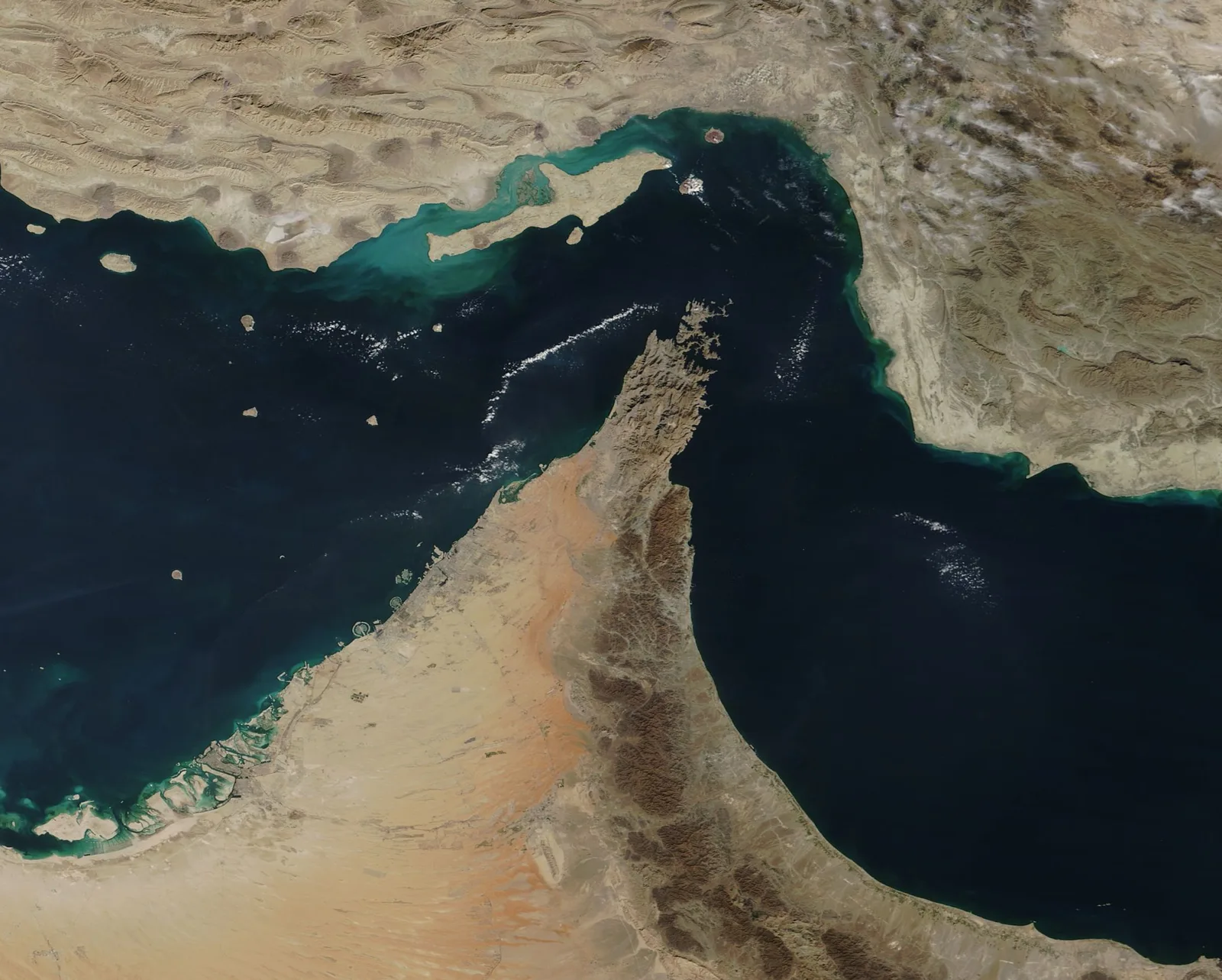 File photo
What happened
Key facts
- US Central Command said US forces helped Gulf partners export more than 1.5 billion barrels of crude oil through the Strait of Hormuz since summer (per Arab News, dailybeirut.com).
- CENTCOM said US forces supported more than 3,000 commercial vessels transiting the Strait of Hormuz during the past six months (per Arab News, dailybeirut.com).
- CENTCOM said more than 95 percent of ships navigating the strait in recent months passed through safely (per Arab News, dailybeirut.com).
- CENTCOM said US forces had worked to clear mines in the Strait of Hormuz (per Arab News, dailybeirut.com).
- CENTCOM attributed the danger to ships in the strait to activity by Iran’s Revolutionary Guard; Arab News described it as aggression, while dailybeirut.com called it unprovoked attacks (per dailybeirut.com, Arab News).
The brief
US Central Command says American forces helped Gulf partners export more than 1.5 billion barrels of crude oil through the Strait of Hormuz since summer.
The command also reported that US forces supported the passage of more than 3,000 commercial vessels through the waterway during the past six months, presenting the figures as evidence of its role in keeping maritime traffic moving. CENTCOM said more than 95 percent of ships navigating the strait in recent months passed through safely.
The command linked the risks to activity by Iran’s Revolutionary Guard. Arab News described that activity as aggression, while dailybeirut.com used the phrase “unprovoked attacks.” Those are the outlets’ differing descriptions of CENTCOM’s characterization; neither excerpt supplies incident-level details to substantiate the terms.
The command’s leader, Brad Cooper, visited the Strait of Hormuz, and Arab News reported that US forces had worked to clear mines there. The report places the visit alongside CENTCOM’s account of oil exports and vessel movements, but does not state how many mines were cleared or specify when the work took place.
The maritime figures come as the strait remains an area of military activity. Arab News said an April 8 ceasefire between Iran and the United States stopped the most intense fighting, although sporadic exchanges of fire continued in and around the waterway. It did not identify the parties responsible for those exchanges or describe particular incidents.
Arab News also reported that President Donald Trump had said Washington “may do another little Epic Fury,” referring to the US-Israeli campaign against Iran. The outlet placed that remark a day before Cooper’s visit. The excerpt does not provide further details about the circumstances or timing of the reported statement.
Iranian Foreign Minister Araghchi, speaking at a televised event in Tehran, said Iran’s policies would not change whether there was war or not. His statement presents Iran’s position as CENTCOM publicizes US support for Gulf oil exports and commercial shipping through the strait.
The accounts describe those positions and the reported maritime activity, but do not connect Araghchi’s remarks to a specific shipping incident.
Why it matters
- The Strait of Hormuz is a key route for Gulf crude exports, so disruption there could delay shipments and raise costs for oil producers, shipping firms and energy buyers. CENTCOM’s figures describe the scale of US-supported traffic, but do not independently establish how much that support changed export volumes, prices or the risk to vessels.
What to watch next
- Whether CENTCOM reports further support for Gulf oil exports or commercial vessel transits through the Strait of Hormuz.
- Whether CENTCOM provides additional detail about its reported mine-clearing work in the strait.
- Whether Iran’s Revolutionary Guard activity or the sporadic exchanges of fire described by Arab News affect commercial passage.
- Whether the reported remarks by President Donald Trump are followed by a stated US decision about another operation he called “Epic Fury.”
How it's being covered
Coverage analysisShow details5 source articles · 5 unique outletsOutlet political mix: Too few rated· 1 Left · 1 Center · 3 unratedWhere the outlets are based: Middle East 40% · Unknown 40% · Other 20%
How outlets' accounts compare
3 framing differences · 3 uncorroborated claims · 5 information gaps- Arab News described the Revolutionary Guard activity cited by CENTCOM as “aggression”; dailybeirut.com described it as “unprovoked attacks.”
- Arab News reported that Cooper flew over the strait in a CH-47 Chinook helicopter; dailybeirut.com described his visit without that detail.
- Both outlets attribute the oil-export, vessel-transit and safe-passage figures to CENTCOM; neither presents them as independently verified.
- CENTCOM said US forces helped Gulf partners export more than 1.5 billion barrels of crude oil through the strait since summer.
- Araghchi said Iran’s policies would remain unchanged whether there was war or not.
- Arab News reported Trump had said Washington “may do another little Epic Fury.”
- The excerpts do not specify how many mines US forces cleared, when clearance work occurred, or which Gulf partners benefited from the reported exports.
- The excerpts do not provide independent data on oil volumes or vessel movements to corroborate CENTCOM’s figures.
- The excerpts do not identify the incidents underlying CENTCOM’s characterization of Revolutionary Guard activity.
- CENTCOM’s claim that more than 95 percent of ships passed safely is not independently verified in the excerpts.
- The reports do not give incident details or identify the parties responsible for the sporadic exchanges of fire described by Arab News.
Timeline
Developments from this story's sources, dated background we compiled and fact-checked, and our earlier coverage. Each row says which.- The United Nations adopted the Convention on the Law of the Sea, which established transit passage through international straits.Background · compiled and fact-checked by Updat3
- Iran and Iraq began attacking commercial shipping in the Persian Gulf during the Tanker War.Background · compiled and fact-checked by Updat3
- After Iraq and Iran attacked commercial shipping in the Persian Gulf, the United States began Operation Earnest Will in July 1987, escorting reflagged Kuwaiti tankers.Background · from our historical context
- On July 24, 1987, the escorted tanker Bridgeton struck a mine.Background · from our historical context
- On April 14, 1988, the USS Samuel B. Roberts hit an Iranian mine; four days later, US forces attacked Iranian naval and oil-platform targets in Operation Praying Mantis.Background · from our historical context
- The U.S. Navy launched Operation Praying Mantis, striking Iranian naval forces and installations after a U.S. ship hit an Iranian mine.Background · compiled and fact-checked by Updat3
- Two tankers were damaged in the Gulf of Oman; the United States blamed Iran, which denied involvement.Background · compiled and fact-checked by Updat3
- The United States and Israel launched coordinated strikes across Iran.Background · compiled and fact-checked by Updat3
- Iran announced that vessels passing through the Strait of Hormuz would need prior authorization from the IRGC Navy.Background · compiled and fact-checked by Updat3
- Maritime security sources recorded at least 10 vessels targeted, including oil and liquefied natural gas tankers off Fujairah and Sohar.Background · compiled and fact-checked by Updat3
- Iran presented a proposal to reopen the Strait of Hormuz after an interim ceasefire collapsed.Background · compiled and fact-checked by Updat3
- Iran says Hormuz reopening offer remains conditional on US concessionsEarlier Updat3 coverage
- Iranian Guard says mines set two tankers ablaze in Strait of HormuzEarlier Updat3 coverage
How we got here
The immediate backdrop to the Strait’s role in Gulf oil exports was the US-Israeli war with Iran, which began on February 28, 2026, when the two countries launched coordinated strikes on Iranian power plants, air defenses and military infrastructure.
That conflict placed a strategic shipping route at the center of a wider regional security crisis; the United States and Israel described their strikes as defensive, while Iran’s government characterized its actions as responses.
Original sources
1 of 5 articles · Asia · Show allEvery story links to the reporting it was built from. How we choose sources
Spotted a factual error, a broken link or a misleading summary? Tell us.